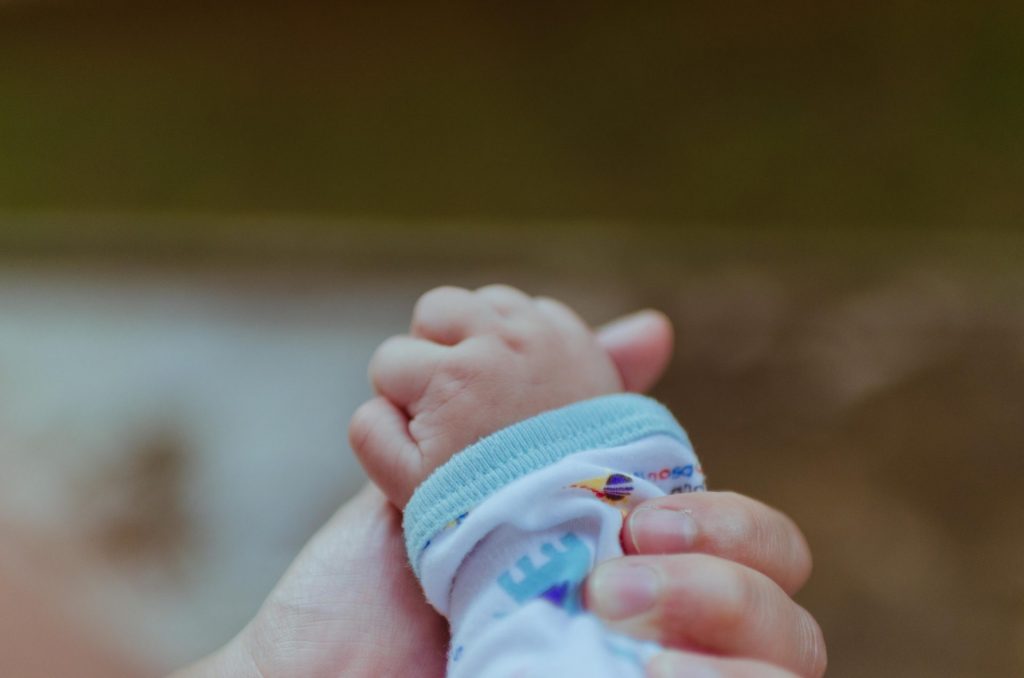
From birth, babies use their hands to explore their own bodies and the world around them. The development of hand skills depends on the baby developing skills (gross motor and vision) suitable for their age, providing the basic structure from which the arm and hand can be moved with control.
Deb’s Key Takeaways
Skills needed for development of early fine motor milestones:
- Gross motor skills
- Vision
- Cognition/social skills
- Fine motor skills
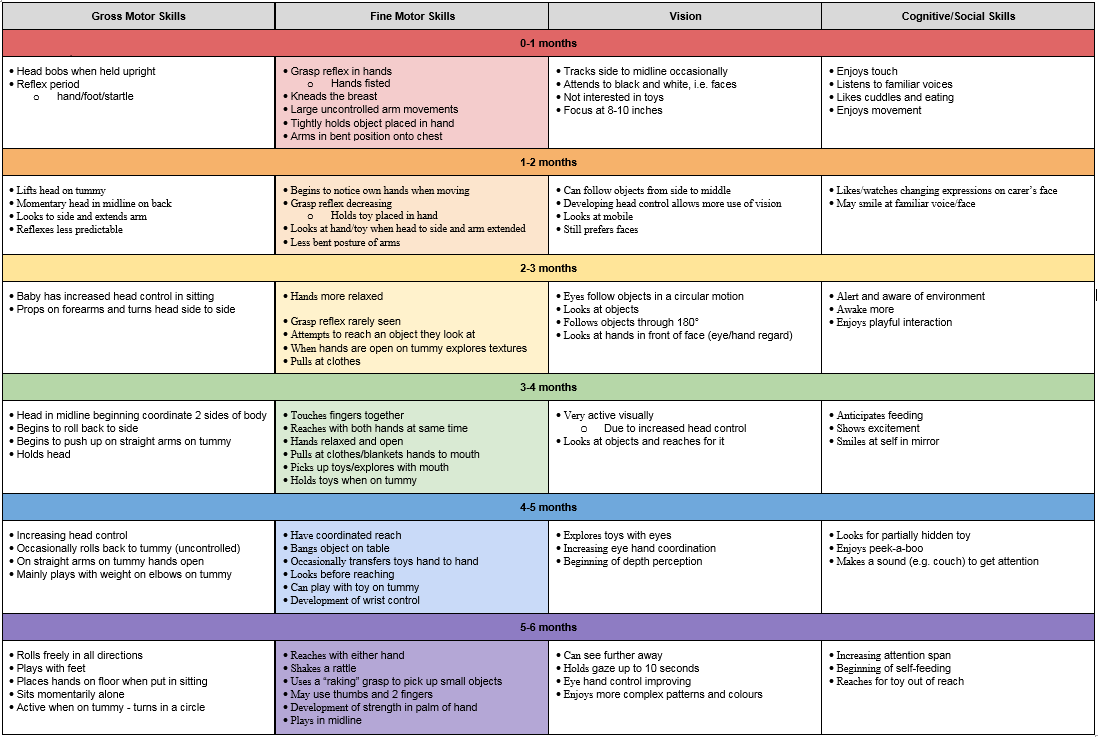
Development of fine motor skills 0-6 months
Importance of fine motor development...
- Strengthening of hand muscles
- Beginning of play
- Exploring your baby’s world using their senses
- Development of eye-hand control
Ways to encourage fine motor (hand skill) development...
- Exposure to tummy time
- Provide lots of visual stimulation
- Give them different touch experiences
Early fine motor development is important because...
- Little hands need to develop strength and skill
- Develop touch and provide learning experiences of world around them
- Develop of eye hand regard and use of vision in play
- Beginning of a lifetime of play
- Beginning of independent self-help skills, e.g. finger feeding

Ways to encourage your baby’s fine motor development
0-3 months
- Let them hold your finger from birth
- Give your baby lots of sensory experiences Hand lotion, soft/hard toys, different textures
- Place rattles in their hand
- Give them lots of tummy time
- Hang mobiles/toys for them to hit when in pram/cot

3-6 months
- Encourage them to reach for dangly objects
- Offer toys when they are silly on your lap
- Offer lots of different sensory experiences in bath/on tummy
- Introduce self-feeding and messy play
- Give them toys to hold with both hands
- Play peek-a-boo – encourage baby to lift the blanket
- Use suction toys on high chair

When to ask for help
- If your baby isn’t following your face or toy by 2-3 months
- If your baby is not meeting gross motor milestones
- If your baby continues to keep their hands fisted past 2-3 months
- If your baby isn’t reaching for a toy and holding by 4 months
- If your baby doesn’t play with both hands together by 5-6 months
- If your baby is not picking up small objects (e.g. self-feeding) by 6 months

Fine motor (play skills) in the first 6 months of your baby’s life are dependent on them also reaching gross, visual, and cognitive skills. If you have any concerns relating to your baby’s early hand skill development, speak to your GP, physiotherapist, or occupational therapist.
Keep safe, happy, and well.
Deb