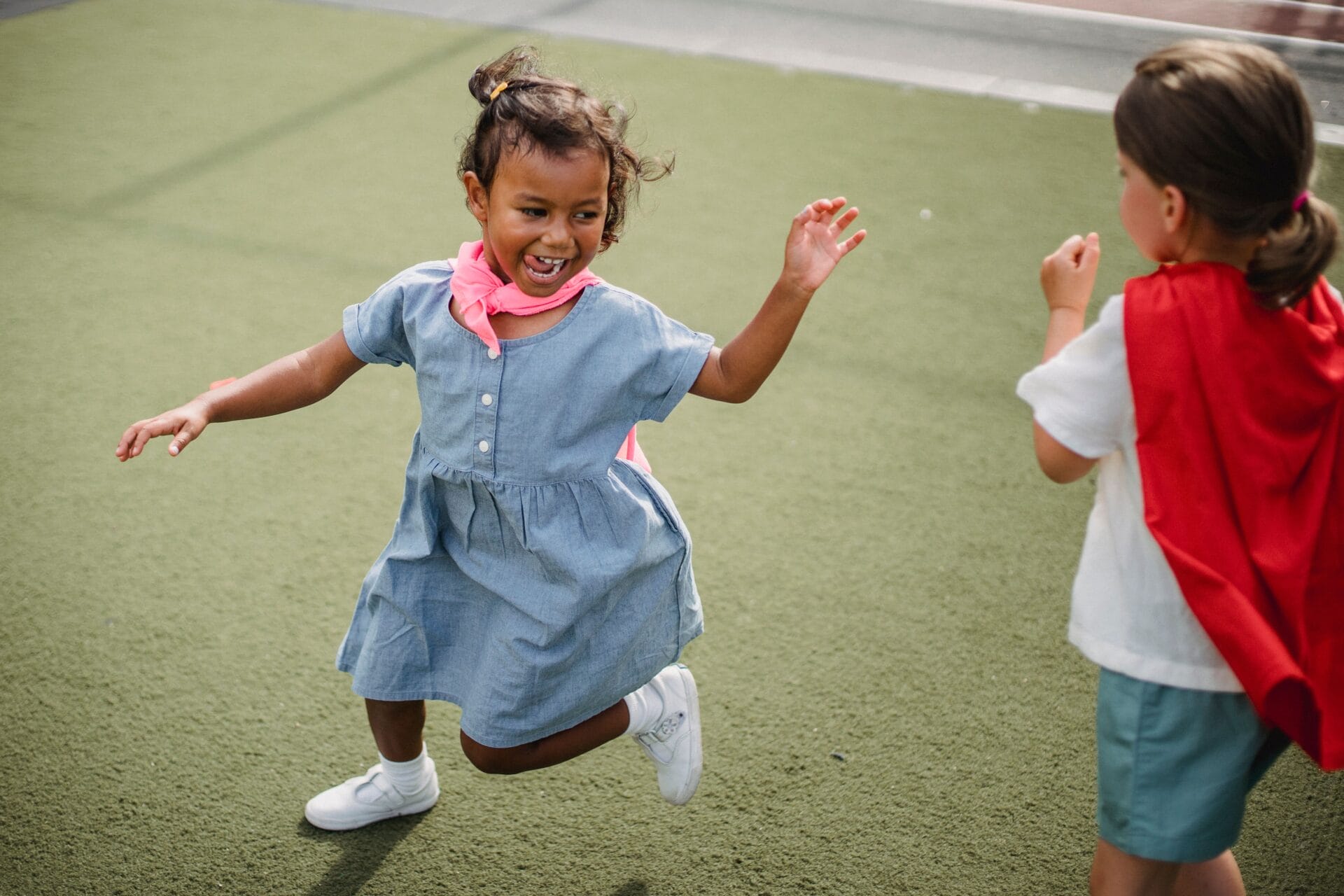
Jumping is important for a number of reasons
- Balance: This is the first time 2 feet leave the ground at once. They first use dynamic balance where they do a number of jumps in a row and then learn to jump and stop.
- Muscle strength: Jumping requires all the muscles of your legs. Toddlers need to bend their knees and then push off on their toes using thigh and bottom muscles.
- Bone strength: The pressure downwards through the bones of the legs helps them grow and harden.
- Motor planning: Jumping requires continual motor planning. For example, how to judge distance, how to plan the power needed to jump and land, how to plan where to jump (up, over, forward), and how to perform the jump and stop safely.
- Health and fitness: Physical activity is necessary for health and jumping is often a large part of children’s physical day.
- Social interaction: Jumping is used often in children’s play and if a child can’t jump they may not be included in games or may shy away from these games.
What signs you may see if your child is having trouble jumping
Toddlers begin to experiment with jumping from around 18 months.
- Not jumping by 2.5-3 years old.
- Can’t get off floor when attempts to jump.
- Is scared of jumping off steps.
- Jumps with one side only.
- Difficulty jumping and stopping.
- Scared of jumping across heights by 3-4.
- Falls over when attempting a jump.

Ways to encourage jumping
There are many ways in which you can encourage your child to jump.
- Strengthen your toddler’s legs by getting them to walk on their toes, squat to play.
- Help them jump by holding 2 hands and lifting them up as they squat.
- Provide soft surfaces to jump on – mattresses/trampoline (assists the push off).
- Jump on bubbles blown on the ground.
- Jump over tape on the ground.
- Jump with them.
- Jumping off a step is sometimes easier.
- Animal jumps – frog jumps.
- Jump from one circle to another.
- Tape hoops together and jump over.
- Make hurdles using broomsticks and hurdles.
- Hopscotch
- Pool noodles to jump over.
- Jump onto footprints (encourages 2 feet).
If you have any concerns about the way your child jumps or if they are not jumping by 2.5-3 years of age, contact your GP or paediatric physiotherapist.
As children build their jumping skills, they may begin exploring hopping on one foot and later skipping. If you have questions about your child’s balance or coordination, you can also learn more about our paediatric physiotherapy services or enquire with our team.
Stay safe, happy, and well,
Deb