Speech Sound Difficulties and Language Delays
Speech Sound Difficulties (Articulation and Phonological Delays)
Speech sound difficulties describe how a sound is made when speaking. Speech sounds are made of individual sounds that are combined to form words. For example:
- dog as d-o-g
- ship as sh-i-p
When some sounds are missing or changed during talking, this can make it difficult for the listener to understand.
By around 6 years of age, a child’s speech sounds should generally be clear and easy to understand. Children develop speech sounds at different ages, but there are expected milestones along the way.

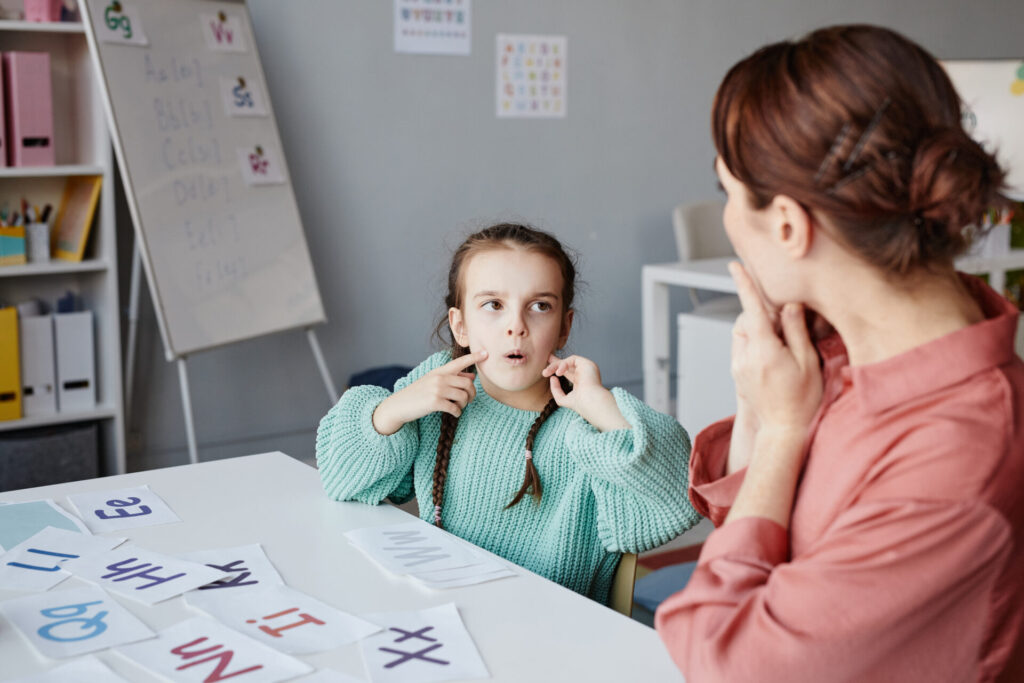
Types of speech sound difficulties include:
A Speech Pathologist can assess, diagnose and treat all of the below speech sound difficulties:
Phonological delay
This is when a child simplifies sounds in words in a pattern beyond the expected age. For example, cluster reduction (spoon → ‘poon’ or blink → ‘bink’) or fronting sounds (car → ‘tar’).
Articulation difficulties
This is when a child has difficulty producing a sound the expected way, causing it to sound different. This can happen when the tongue, lips or jaw are not in the correct position to produce the sound. For example, saying ‘s’ as a ‘th’ (sun → ‘thun’) or replacing ‘r’ with a ‘w’ sound (rabbit → ‘wabbit’).
Childhood Apraxia of Speech
This occurs when the brain has difficulty planning and sending the instructions to the speech muscles. This may result in inconsistent speech errors, difficulty combining sounds and speech that appears effortful for the child.
Dysarthria
A motor speech difficulty caused by poor control and weakness in the speech muscles. Speech may sound weaker, slower, slurred or breathy.
Structural related speech difficulties
This is caused by a physical difference in the mouth or vocal tract such as cleft palate, jaw differences, tongue or dental differences.
Hearing related speech sound differences
This is caused by hearing loss or reduced hearing. Speech may have less clarity and some high frequency sounds such as ‘f’, ‘s’ or ‘th’ may be missing.

Contact TFK Today!
We believe in every child and young person’s potential. We have the vision to recognise it. We have the expertise to unlock it.
Start your journey to progress today!
Language Delays and Difficulties
Language is broken into two main areas:
- Receptive language – the understanding of words, sentences, concepts, instructions and questions.
- Expressive language – how a child communicates using words, sentences, grammar, stories, questions and gestures.
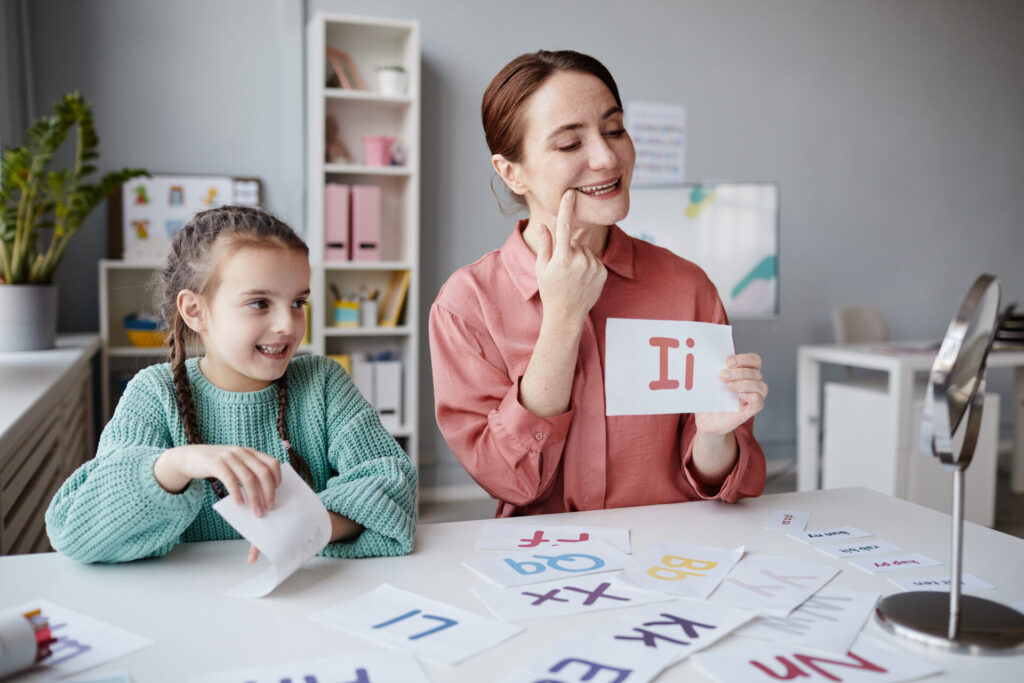
Common language difficulties include:
- Receptive language delay – difficulties with following instructions, answering questions or understanding stories.
- Expressive language delay – shorter sentences, grammar errors, limited vocabulary and difficulty explaining ideas or describing events.
- Mixed receptive and expressive language difficulties – a combination of both understanding and expressing language.
- Developmental Language Disorder (DLD) – a life‑long language disorder that has no known reason. As it is often a hidden disability and long‑term condition, children may be at risk of difficulties accessing learning and may experience mental health challenges later in life.
- Pragmatic language disorder – difficulties using language socially, for example during conversations.
When to Seek Support
If you are concerned about your child’s speech clarity, their ability to understand language, or how they express themselves, a Speech Pathologist can provide an assessment and guidance.
How Speech Pathology Can Help
Speech Pathologists assess speech and language development and create personalised therapy plans to support communication skills. Therapy may focus on speech sounds, language understanding, vocabulary development, social communication and building confidence when communicating with others.