
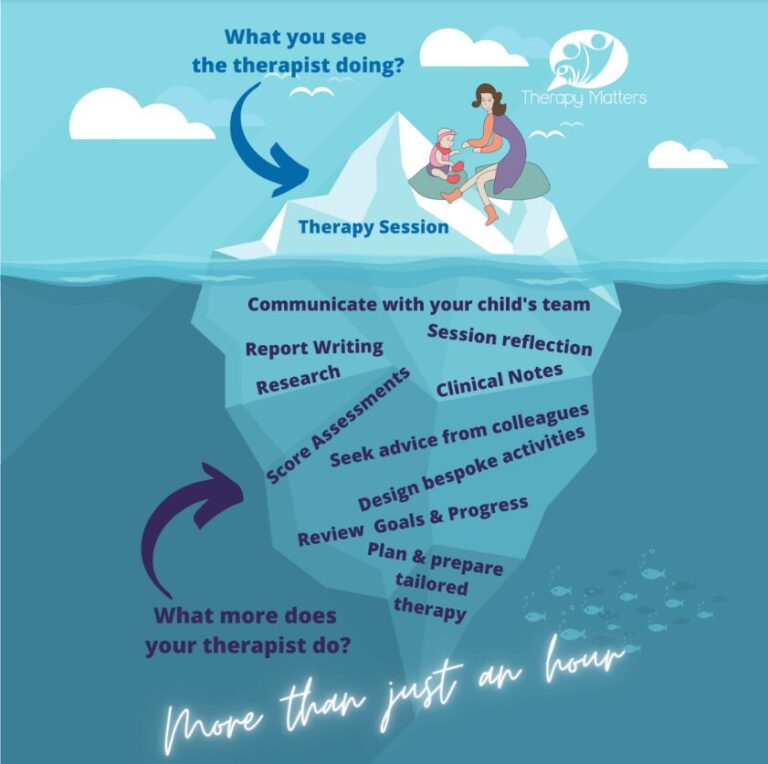
Just below the surface are hours of work that make therapy sessions effective, goal-directed, and safe. Here’s what parents don’t always see:
1. Planning & Preparation
-
-
Reviewing previous goals and outcomes to understand progress and ongoing needs
-
Adapting or creating new activities tailored to your child’s specific strengths and learning profile
-
Gathering and preparing materials or therapy tools in advance
-
Considering sensory preferences, emotional regulation, and behavioural strategies that might influence the session
-
Scoring assessments to clarify therapy focus areas
-
Creating visual schedules, communication tools, or supports based on the child’s needs
-
Researching your child’s diagnosis, comorbidities, or specific therapy strategies
-
Liaising with the therapy team to align expectations, monitor transitions, or manage risks
-
This planning is invisible but critical. It informs the therapist’s moment-by-moment decisions in session and helps them be responsive to the child’s cues. It also ensures safety and effectiveness across diverse therapy environments.

2. Clinical Documentation
-
- Writing detailed progress notes to track development and outcomes
-
Preparing structured reports for NDIS reviews, school applications, or other funding processes
-
Regularly updating therapy plans to reflect changes in needs, goals, or circumstances
-
Completing compliance-based documentation to meet NDIS and organisational standards
-
Maintaining communication logs, therapy summaries, and relevant documentation across home, school, and community settings
-
Ensuring information is accessible to all members of the child’s support team
-
Supporting advocacy through well-written reports and measurable data
These reports are vital for funding, reviews, and demonstrating therapy impact. They’re time-consuming but necessary to secure ongoing support for the child and show the value of the therapy being delivered.

3. Collaboration & Communication
-
- Liaising with teachers, support workers, case managers, and specialists to ensure consistent strategies across settings
-
Participating in family/team meetings, IEP planning, and joint goal setting
-
Sharing strategies with educators and modifying plans to suit different environments
-
Providing verbal and written updates to parents/carers
-
Responding to concerns or questions with thoughtfulness and clinical clarity
-
Documenting collaborative actions and changes in support plans
-
Adjusting recommendations based on input from families or school teams
This is often unseen and unpaid, but it’s where a lot of advocacy happens. Therapists work hard to make sure everyone is on the same page so the child can thrive across all their environments.

4. Professional Development & Supervision
-
- Attending internal and external training to expand knowledge and remain current with evidence-based practice
-
Engaging in peer supervision, mentoring, or reflective practice to maintain professional standards
-
Participating in clinical interest groups and shared learning sessions
-
Reviewing updates to NDIS practice guidelines, therapeutic approaches, and paediatric development
-
Contributing to a learning culture that benefits clients, families, and the wider team
TFK places high value on supervision and learning. This ensures our therapists grow professionally and continue to deliver exceptional care that meets current standards and client needs.