A Therapist’s Perspective: Why Sensory Processing Matters
After more than four decades working alongside children, families and educators, one truth has never changed: every child experiences the world through their senses long before they use words to explain it. Sensory processing is the foundation for how children understand their bodies, their emotions and the world around them.
It influences everything children do — how they learn, how they play, how they move, how they connect and how they feel about themselves. When a child’s sensory system is working efficiently, daily life feels predictable, calm and meaningful. But when this foundation is shaky or inconsistent, even simple routines can feel overwhelming, unpredictable or exhausting.
Sensory processing is not about tolerating textures or noises. It is the driving force behind emotional regulation, behaviour, body awareness, motor skills, social engagement, confidence, and participation. When this foundation is strong, children thrive.
Understanding your child’s sensory profile is one of the most powerful steps you can take in supporting their development.
What Is Sensory Processing?
Sensory processing (or sensory integration) is the brain’s ability to:
Receive sensory messages
Organise this information
Decide what is important
Respond in a meaningful and appropriate way
This process happens constantly — even when we are not aware of it. For some children, the brain has difficulty filtering, interpreting or organising information, which can lead to behaviours often misunderstood as “meltdowns,” “defiance,” “fussiness,” “hyperactivity,” or “avoidance.”
But these behaviours aren’t intentional.
They are neurological responses. And with the right support, children can learn to regulate, cope and participate with growing confidence.
Understanding the Seven Sensory Systems
Many parents are familiar with the five senses, but paediatric therapists work with seven interconnected sensory systems. Each provides essential information for learning, behaviour, emotional wellbeing and physical development.
1. The Tactile System (Touch)
The tactile system develops early — even before birth — making it one of the most important for bonding, safety, motor planning and emotional security.
Touch receptors provide information about pressure, temperature, vibration, pain and movement across the skin.
Children who struggle in this area may:
-
Avoid certain clothing textures or grooming tasks
-
Find messy play distressing
-
Constantly seek touch or deep pressure
-
Misinterpret light touch as threatening
2. The Auditory System (Sound)
This system helps children filter background noise, follow instructions and stay calm in busy environments.
When inefficient, everyday sounds — sirens, blenders, classroom chatter — can feel overwhelming.
3. The Visual System (Sight)
Vision supports early reading skills, handwriting, navigating space, body awareness, play and understanding routines.
4. The Vestibular System (Balance and Movement)
Often referred to as the “master sense,” the vestibular system influences balance, muscle tone, attention, emotional regulation and spatial awareness. Spinning, climbing, rolling and swinging activate this system.
5. The Proprioceptive System (Body Awareness)
This system helps children understand where their body is without relying on eyesight. It underpins coordination, strength, hand skills, posture and regulation. Children often seek deep pressure, pushing, pulling or crashing to “feel grounded.”
6. Taste and Smell (Gustatory and Olfactory Systems)
These senses influence selecting eating, comfort, preferences and safety awareness.
7. Interoception (Internal Body Signals)
Interoception helps children recognise hunger, thirst, toileting needs and emotional states. Children with interoceptive challenges may:
-
Not notice when they need the toilet or a drink
-
Struggle to identify emotions
-
Find it difficult to calm after becoming upset
Signs of Sensory Processing Difficulties
Sensory patterns most commonly present in four ways:
1. Sensory Seekers
Children who crave movement, pressure, noise or touch.
They jump, climb, chew, spin or constantly move because their bodies are searching for regulation.
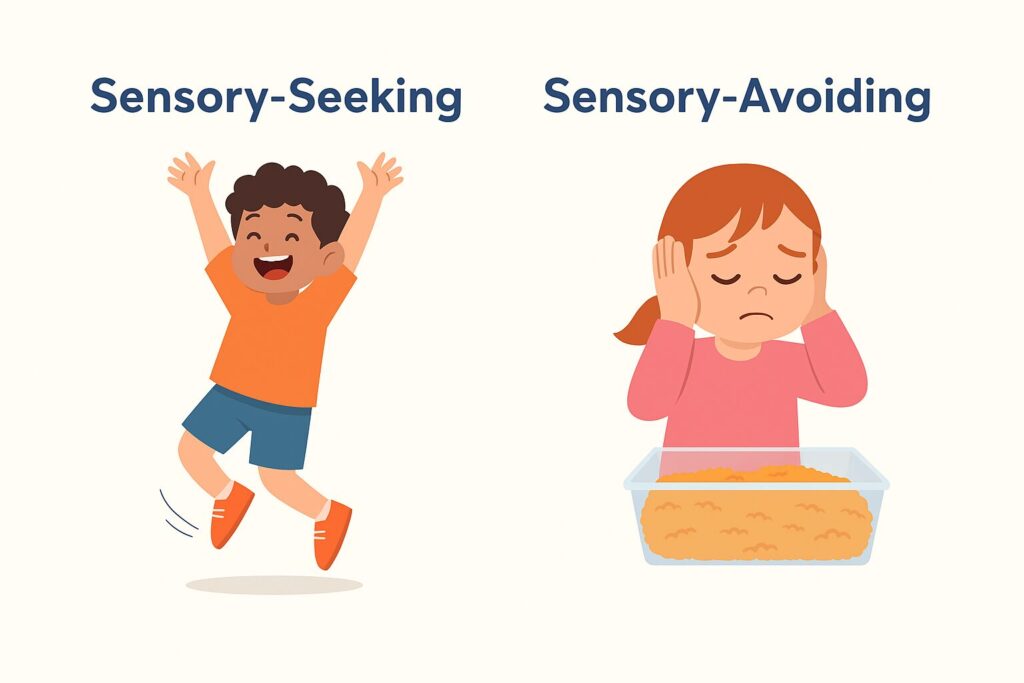
2. Sensory Avoiders
Children who feel overwhelmed by sensory input. They may cover ears, avoid textures, dislike busy environments or become distressed during grooming or self-care tasks.
3. Fluctuating Profiles
Children who shift between seeking and avoiding depending on stress, fatigue or the environment.
4. Regulation Challenges
Difficulty finding the “just right” level for calm play or learning. These children may experience meltdowns during transitions, fidgeting, sleep difficulties or constant restlessness.
How Sensory Processing Influences Daily Life
Sensory processing affects:
-
Behaviour and emotional regulation
-
School readiness and attention
-
Social confidence
-
Motor development
-
Play and imagination
-
Independence and self-care
-
Participation at home, school and in the community
When children feel secure in their sensory experiences, they are more able to explore, learn, connect and grow.
Strategies Parents Can Use at Home
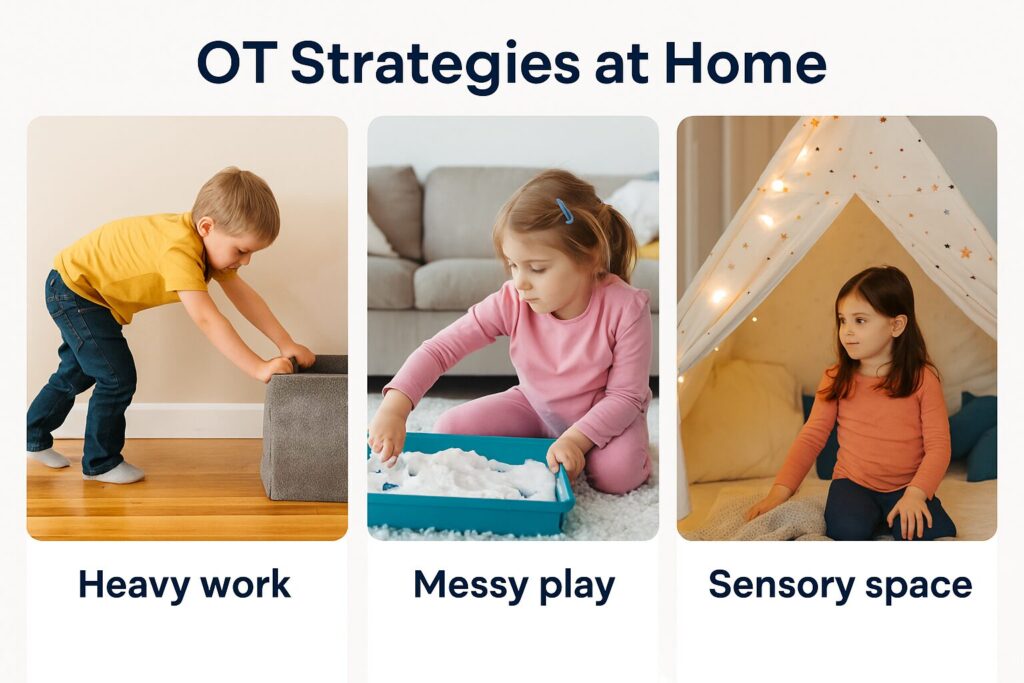
1. Incorporate Heavy Work
Deep pressure and resistance activities help regulate the nervous system.
Try: pushing/pulling games, carrying groceries, climbing, rolling in blankets, rough-and-tumble play, animal walks, wheelbarrow walks.
2. Build Predictability Around Transitions
Use timers, “first–then” language, countdowns, visual cues, routines, songs and themes to support smoother transitions.
3. Create a Sensory-Safe Space
Use cushions, soft lighting, weighted items, music, a lava lamp or noise-cancelling headphones to help children reset.
4. Offer Regular Movement Breaks
Every 20–40 minutes, offer movement that supports attention and regulation: jumping, rolling, spinning, obstacle paths, wobbly cushions, scooter boards, yoga poses or wheelbarrow walks.
5. Gradual Tactile Exploration
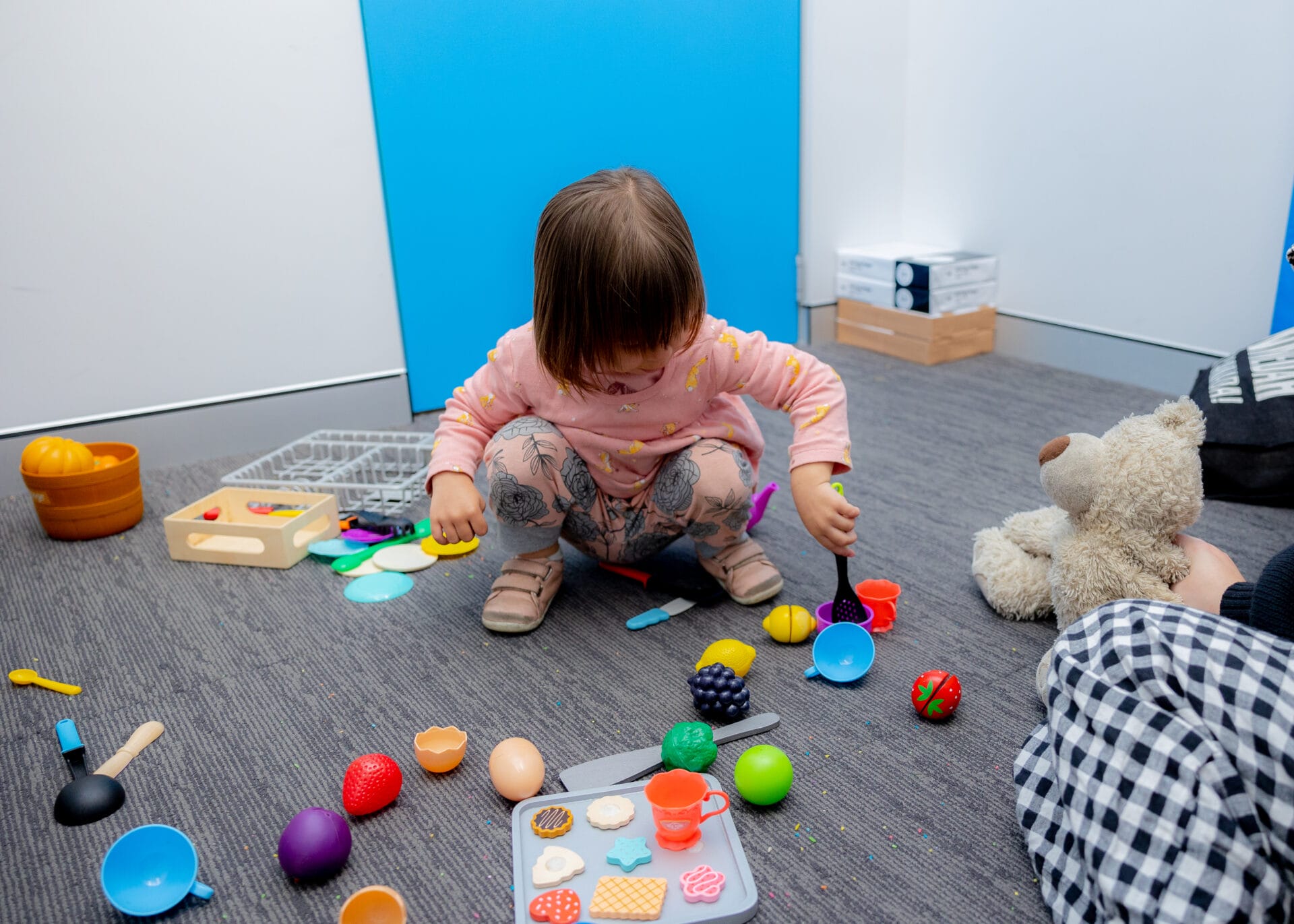
Introduce messy play slowly using tools first (spoons, brushes, spatulas). Progress to hands as comfort increases.
Examples: rice, pasta, water beads, shaving foam, sand, gloop, cooked foods, yoghurt or custard.
6. Emotional Co-Regulation
A calm adult helps calm a child’s nervous system.
Connection before correction — slow breathing, body rocking, rhythmic movement, yoga or sensory breaks.
7. Follow the Child’s Lead
Play is the most powerful sensory and developmental tool.
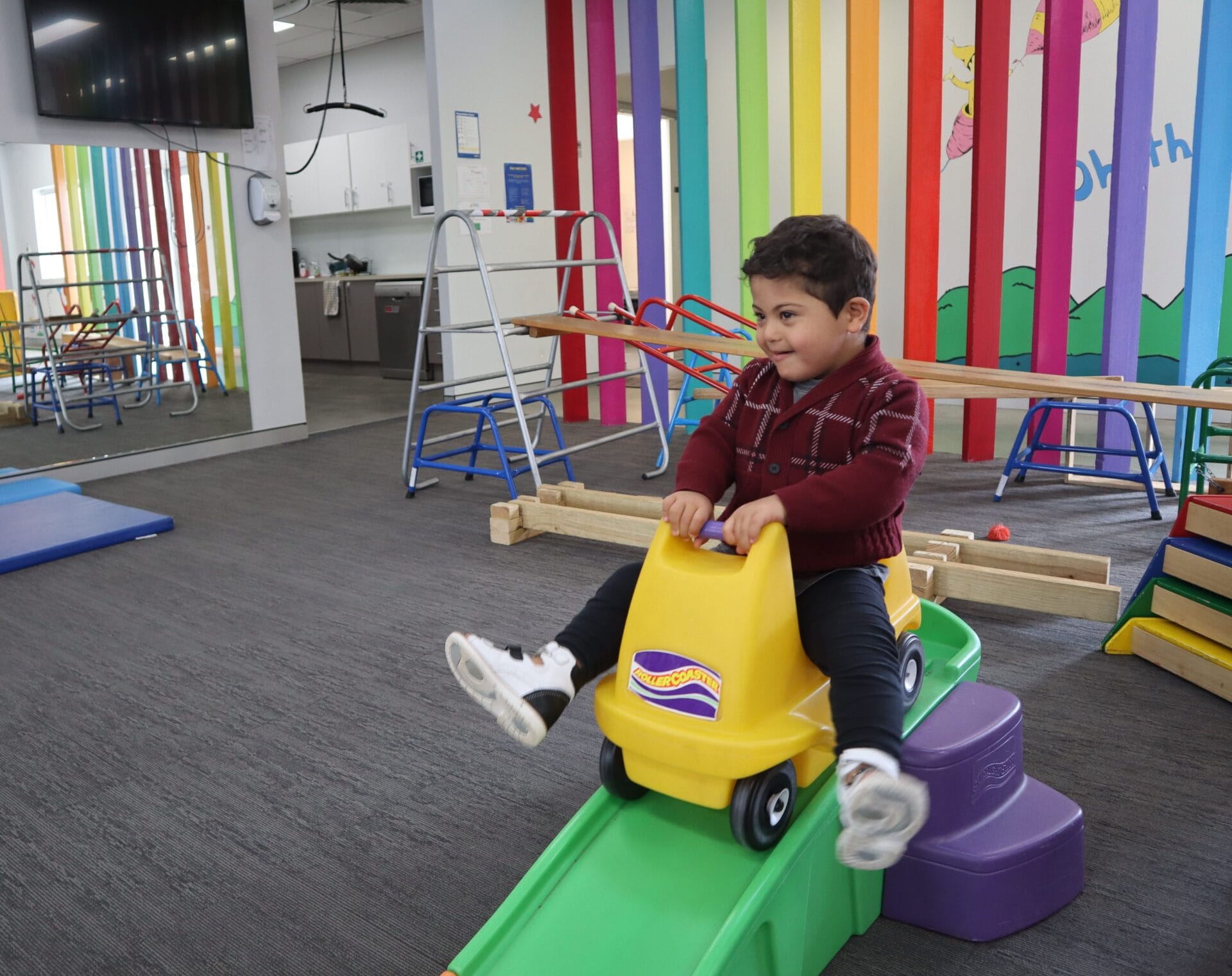
At TFK, children engage in joyful movement in our:
-
Sensory gyms
-
Harness systems
-
Obstacle courses
-
Swings
-
Music and visual rooms
-
Individual therapy spaces
-
Kitchen and life-skill rooms

When to Seek Professional Support
Parents should consider an OT assessment if their child:
-
Becomes easily overwhelmed by noise or touch
-
Avoids grooming or clothing textures
-
Has difficulty with self-care activities
-
Has trouble sitting still, attending or following routines
-
Appears constantly on the move
-
Struggles with gross or fine motor skills
-
Avoids play with peers
-
Has difficulty with transitions
-
Appears anxious, clingy or dysregulated
-
Becomes upset when play is disrupted
Early support helps build lifelong foundations for play, learning, social skills and sensory regulation.
How Therapies for Kids Supports Sensory Development
With more than 45 years of combined clinical experience, TFK provides a transdisciplinary, relationship-first approach to sensory development.
Our services include:
-
Purpose-built sensory gyms
-
State-of-the-art fitness and movement equipment
-
Play-based, intensive and weekly therapy
-
Speech, physio, OT and EP collaboration
-
Parent coaching and home strategies
-
NDIS assessments and reporting
-
Telehealth services for rural and remote families
Our goal is simple: to help every child feel safe, confident and capable in their world.
Final Reflection
Children do not grow in straight lines. They grow in relationships, in play, in moments of connection and in environments where they feel truly understood.
Sensory processing is not about fixing a “problem.” It is about understanding the child behind the behaviour and giving them the support their nervous system needs to feel grounded and ready to learn.
With the right strategies, the right team and the right environment, children of all abilities can be supported to develop to their full potential — and to thrive.
Warm Regards,
Deb.