“She’s just so flexible — she must be double-jointed!”
Sound familiar?
For many parents, a bendy child can seem like a fun party trick or simply part of their child’s personality. But for some children, hypermobility is far more than a harmless quirk, and understanding the difference can have a significant impact on their comfort, confidence and participation.
When nine-year-old Mia started complaining that her legs “hurt all the time” after school, her mum assumed it was growing pains. When Mia’s ankles kept rolling during sport and she began refusing to walk more than a few blocks, they visited the GP. When the GP casually mentioned that Mia was “very flexible,” her mum felt more confused than reassured.
It wasn’t until a paediatric physiotherapist assessed Mia, noting her Beighton score of 7/9, her fatigue pattern and her tendency to hyperextend her knees while standing, that the pieces started to fall into place.
Mia had hypermobility.
More importantly, she could be helped.
If this story feels familiar, this guide is for you.
What Is Hypermobility, and Why Does It Matter for Children?
Hypermobility refers to joints that move beyond the normal range of motion. This is usually due to increased laxity in connective tissue, particularly collagen, which helps support and stabilise joints throughout the body.
In children, some degree of joint flexibility is developmentally normal. Ligaments are naturally more compliant in childhood than in adulthood.
The key clinical question is whether that flexibility is causing symptoms or affecting everyday life.
The Spectrum: From Benign to Symptomatic
Hypermobility exists on a spectrum.
At one end is Generalised Joint Hypermobility (GJH), a common finding that may not cause any functional difficulties or require treatment. Estimates suggest GJH affects approximately 10–30% of the general population, with higher prevalence in children, females, and people of South Asian or African descent (Castori et al., 2017).
At the more complex end are Hypermobility Spectrum Disorder (HSD) and Hypermobile Ehlers-Danlos Syndrome (hEDS). These conditions involve hypermobility together with associated symptoms such as chronic pain, fatigue, proprioceptive difficulties and, in some cases, systemic issues such as dysautonomia or gastrointestinal symptoms (Tinkle et al., 2017).
How Common Is Symptomatic Hypermobility in Kids?
Symptomatic hypermobility is one of the most common causes of chronic musculoskeletal pain in children and adolescents.
A 2011 study by Adib et al. published in Rheumatology found that joint hypermobility was present in 42% of children referred to a paediatric rheumatology clinic with musculoskeletal pain.
Despite this prevalence, symptomatic hypermobility is often under-recognised. According to The Ehlers-Danlos Society, some families report diagnostic delays of many years before receiving clear answers.
Recognising the Signs: How to Tell If Your Child Has Hypermobility
Hypermobility does not always look like a child bending backwards at gymnastics. In many children, the signs are more subtle and can easily be mistaken for other issues.
Physical Signs to Watch For
The most widely used clinical screening tool is the Beighton Score, a nine-point assessment that looks at joint movement in the fingers, thumbs, elbows, knees and trunk. In children, a score of 4/9 or more is commonly considered indicative of generalised joint hypermobility (Juul-Kristensen et al., 2017).
Beyond the Beighton Score, physical signs may include:
- Frequent ankle sprains or “rolling ankles”
- Joint dislocations or subluxations
- Flat feet or foot pronation
- Toe walking
- Hyperextended knees while standing (genu recurvatum)
- Poor grip strength affecting handwriting
- W-sitting or unusual sitting positions
Functional and Behavioural Clues
Children with symptomatic hypermobility often show challenges in everyday activities before their flexibility is recognised.
Common signs include:
- Complaints of “growing pains,” especially in the evenings
- Fatigue that seems disproportionate to activity levels
- Refusal to walk long distances
- Avoidance of sport or physical activities
- Difficulty sitting still and frequent position changes
- Missing school due to pain or tiredness
- Frustration with handwriting and fine motor tasks
A 2012 study by Adib et al. found that children with hypermobility were more likely to miss school and report lower quality of life compared with pain-free peers.
Anxiety, Sensory Processing and the Nervous System Connection
Research suggests that hypermobility may be associated with differences in the autonomic nervous system and interoception, the body’s ability to sense internal signals.
Studies by Dr Jessica Eccles and colleagues have reported higher rates of anxiety and sensory processing differences in people with hypermobility (Eccles et al., 2015).
For families, this can mean that a child who appears anxious, overwhelmed or unusually sensitive may be experiencing genuine physiological differences rather than simply behavioural challenges.
The Impact of Hypermobility on Your Child’s Daily Life
Understanding how hypermobility affects participation can help explain why seemingly small challenges can have a significant impact.
School Performance and Physical Education
Hypermobility can affect handwriting, classroom endurance and physical education.
Children may:
- Tire quickly during written tasks
- Experience pain while writing
- Struggle with grip strength and pen control
- Appear clumsy or poorly coordinated
- Avoid PE due to discomfort or fatigue
Cleaton et al. (2013) found that children with hypermobility demonstrated slower handwriting speeds and greater fatigue during written tasks.
Sleep, Fatigue and Recovery
Many hypermobile children report:
- Difficulty getting comfortable at night
- Frequent waking
- Unrefreshing sleep
- Significant tiredness after school
Hakim and Grahame (2004) highlighted fatigue as a common and multifactorial symptom related to musculoskeletal, autonomic and sleep-related factors.
Social Participation and Mental Health
Pain and fatigue can affect confidence and participation.
Children may:
- Withdraw from sport and playground activities
- Avoid social events
- Feel misunderstood by peers
- Experience reduced self-confidence
Early identification and support can help children participate more fully at home, at school and in the community.

What a Physiotherapy Assessment and Treatment Plan Looks Like
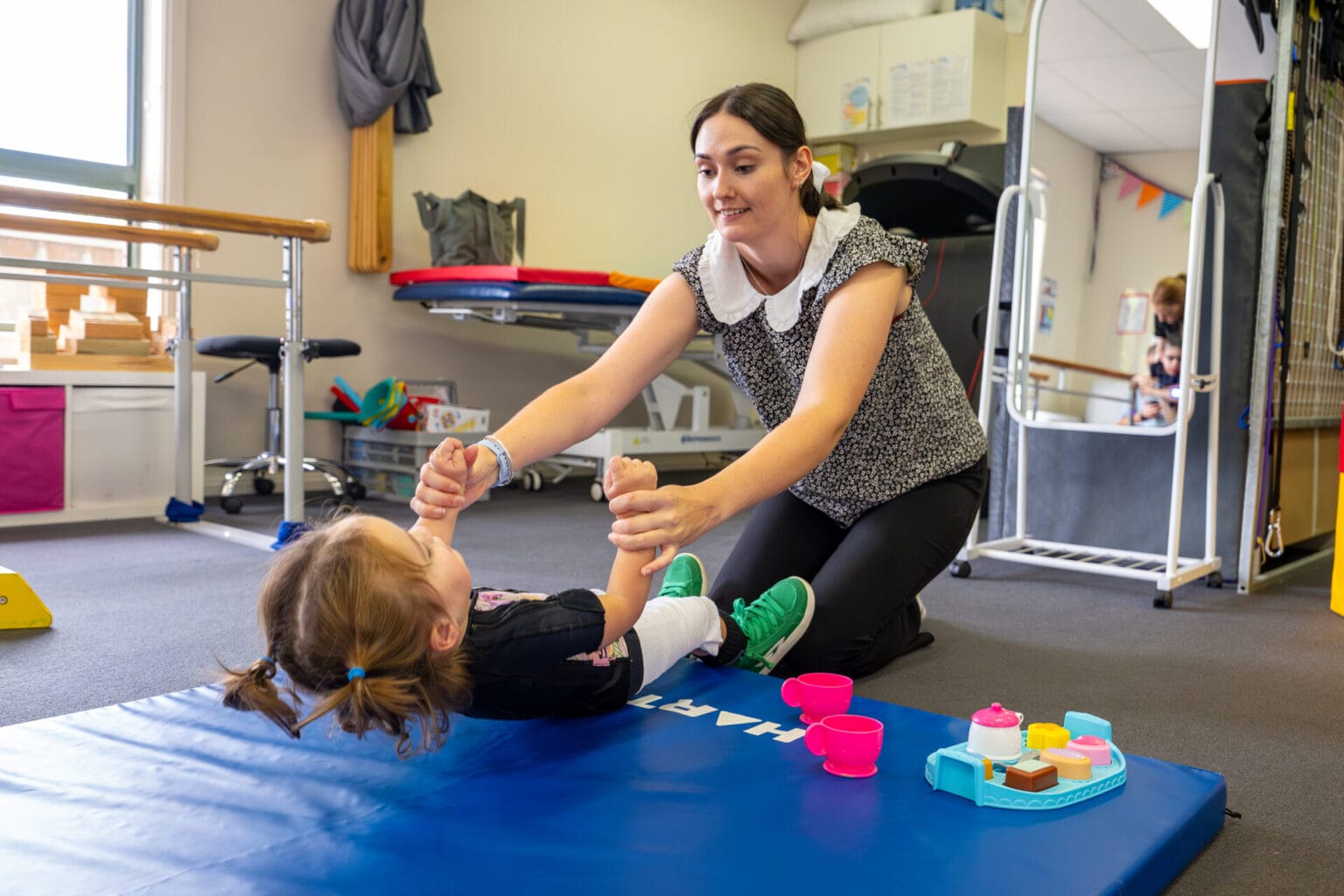
Paediatric physiotherapy plays a central role in supporting children with symptomatic hypermobility.
What to Expect at Assessment
A comprehensive assessment may include:
- Beighton scoring
- Functional movement screening
- Strength testing
- Proprioception assessment
- Fatigue profiling
- Participation history across home, school and leisure settings
Outcome measures such as the Child Health Assessment Questionnaire (CHAQ) or PEDI-CAT may also be used.
Neuromuscular Strengthening: The Foundation
The goal is not to increase flexibility, but to improve:
- Muscle strength
- Joint stability
- Proprioception
- Movement control
Smith et al. (2019) found that targeted strengthening programs can reduce pain and improve function in hypermobile children and adolescents.
Pacing, Load Management and Education
Children and families are supported to:
- Recognise early fatigue signals
- Pace physical activity
- Modify tasks when needed
- Avoid boom-and-bust cycles
- Advocate for school accommodations
When to Seek Further Assessment: Red Flags and Specialist Referral
Not every hypermobile child requires specialist input, but some features warrant further medical assessment.
Clinical Red Flags
Seek medical review if your child experiences:
- Unexplained joint swelling, redness or warmth
- Markedly fragile or hyperextensible skin
- Frequent unexplained bruising
- Significant scoliosis
- Recurrent fainting
- Severe gastrointestinal symptoms
When to Request a Paediatric Rheumatology or Genetics Referral
Children who meet criteria for hypermobile Ehlers-Danlos Syndrome (hEDS) or present with significant systemic features may benefit from referral to paediatric rheumatology and/or clinical genetics.
Frequently Asked Questions About Hypermobility in Children
Will my child grow out of hypermobility?
Joint flexibility often decreases with age, but some children with symptomatic hypermobility continue to experience pain and fatigue. Early physiotherapy can improve long-term outcomes.
Is hypermobility the same as Ehlers-Danlos Syndrome?
No. Ehlers-Danlos Syndrome is a group of heritable connective tissue disorders. Hypermobile EDS is one type. Hypermobility Spectrum Disorder is a related but distinct diagnosis.
Should my hypermobile child stop gymnastics or dance?
Not necessarily. Activities such as gymnastics, dance and swimming can be beneficial when appropriately supervised and supported.
Can school make adjustments?
Yes. Reasonable adjustments may include seating support, movement breaks, extra time for written tasks, modified PE and use of technology.
The Next Step: Don’t Wait and Watch
If your child’s pain, fatigue or clumsiness has been brushed off as “normal,” trust your instincts.
Hypermobility is real, measurable and treatable.
With the right support, children can build the strength, body awareness and confidence they need to participate in the activities they love.
Book an appointment with a paediatric physiotherapist experienced in hypermobility to explore how targeted support can help your child thrive.
Contact Us
Acknowledgement
- This article was developed for Deb’s Blog and is based on the clinical expertise and original contribution of James, whose evidence-informed insights and detailed review of the literature helped shape this resource for families.
References
Adib, N., et al. (2011). Rheumatology.
Adib, N., et al. (2012). Rheumatology.
Castori, M., et al. (2017). American Journal of Medical Genetics.
Cleaton, M., et al. (2013).
Eccles, J., et al. (2015). Brain and Behavior.
Hakim, A., & Grahame, R. (2004). Journal of Rheumatology.
Juul-Kristensen, B., et al. (2017). Journal of Rheumatology.
Smith, T., et al. (2019). Physical Therapy.
Tinkle, B., et al. (2017). American Journal of Medical Genetics.