With the advent of Teletherapy for Kids, our hands cannot touch your child. Our cupboards of toys, puzzles, books (though emptier) are still mainly waiting in the rooms. Therefore, to allow us to provide the best service we can, we have had to use all of our communication skills both verbal and nonverbal during our Telehealth for Kids sessions. As I have sat in on sessions to offer my years of experience to our wonderful therapists, it has become obvious to me how much our therapists and carers depend on gestural cues or signing to aid communication. So, I thought I might discuss the use of gestures and or keyword signs in the development of early language.
When people talk, they gesture. Even children move their hands when they speak. Evidence suggests that children’s’ gestures often reflect knowledge they have but cannot express. This is particularly so in the early stages of language development.
Communication is not just about using spoken words. First, we need to be able to engage a child through gaining joint attention. This social interaction with parents/carers is the early stage of communication. Once you have achieved this then communication begins by facial expressions, gestures, signs, and symbols. These are all ways we express ourselves even before we learn to talk.
Early Communication Development
Birth-9 months
- Development of joint attention/social communication
- Development of visual skills and observation
- Development of motor skills and beginning imitation
- Beginning of reaction to tone and facial expression
9 months
- Earliest gestures develop from actions and reactions of others.
- Children learn when they drop a toy, their carer catches it – they learn to give – carer/parent may then gesture/smile to indicate thank you or to say “ta”.
- Children shake their head to indicate no/turn their head away from food they do not like – then watch their parents/carers response thus learning that a communicative gesture elicits a response.
10 months
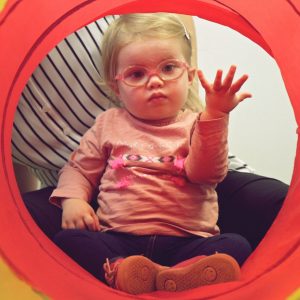
- Children learn to reach for toys.
- They learn to anticipate reactions from others and will raise arms to be picked up – their parent/carer responds and communication is developing – parent/carer will pair words with actions, i.e. pick up, etc.
11 months
- Children begin to hold up objects for the carer/parent to look at – they react to the parent/carer’s laughter, verbalisation, etc.
- They learn to wiggle – move their hand when people leave and come – and the word bye is paired with this by their parents/carer.
12 months
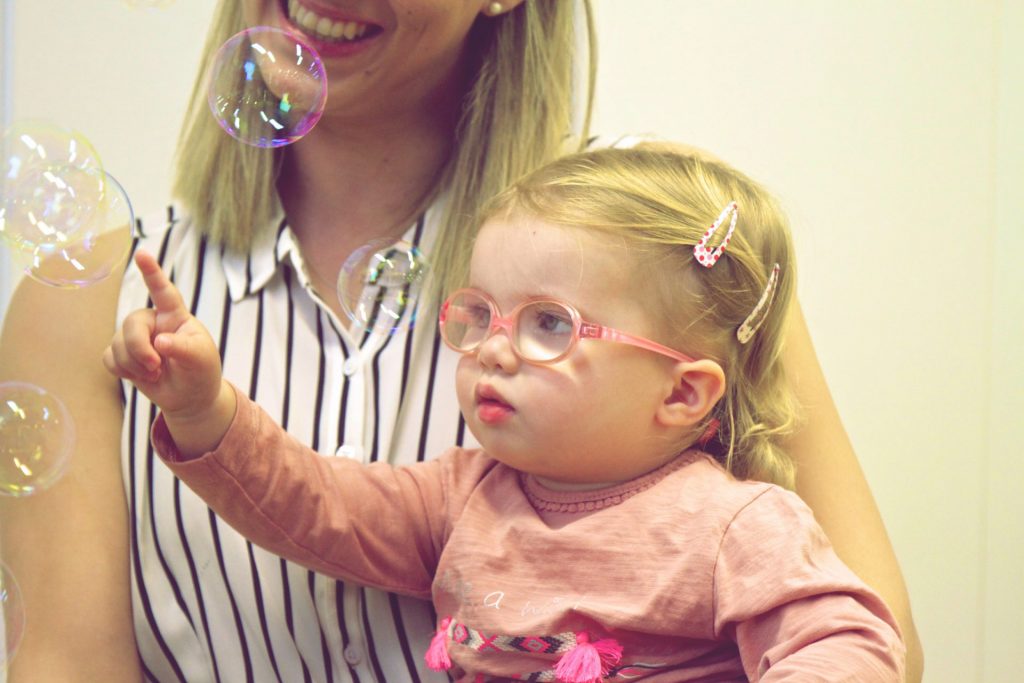
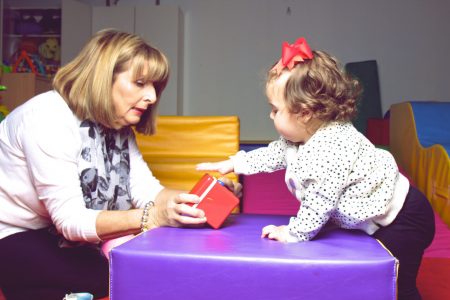
- Children are developing increased motor control and have an open hand point. This allows them to share interest or get the parent/carer’s attention.
- They may use early speech sounds – parent/carer will name the object in response for them.
13 months
- Beginning to imitate gestures as their gross and fine motor control increases. They will clap and blow a kiss. Carer/parent then models the word.
- Their understanding of vocabulary is increasing through these interactions.
14 months
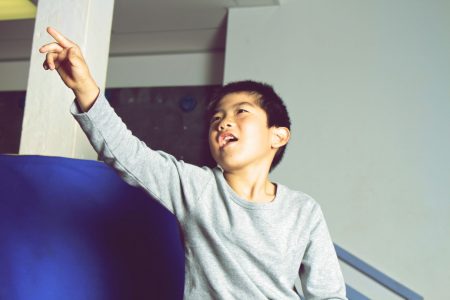
- Children are pointing at objects at a distance with their index finger.
- Also, may indicate shh in play/imitation.
- May begin pointing at their nose/eyes on command.
- Copying gestures of songs, i.e. up in “Twinkle Twinkle,” etc.
- Maybe anticipating the next response in songs/games, etc, i.e. laugh before the tickle in round and round the garden.
15 months
- Significant change in using symbolic gestures that are like words – head nod or thumbs up for yes.
- Hand up for stop or wait.
- Indicate more with a point and/or a facial gesture.
16 months
- Gestures are now bolstering the learning of spoken words and they may communicate with high fives, I dunno, etc.
- May combine a word and a gesture, i.e. point at the dog and verbalise woof etc.
Key Word Signs
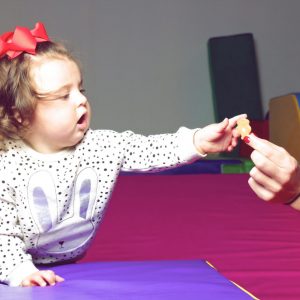
At TFK we are all about using gestures or Key Word Signs (KWS) with our children and families. As discussed above, the use of gestural cues or KWS does not replace spoken words but supports understanding and development of language at any age. KWS can be used with any child who is delayed or having difficulty with the acquisition of language.
KWS/gestures can help to:
- Encourage joint attention
- Increase opportunities for successful and positive communicative interactions
- Reduce frustration where needs and wants cannot be expressed verbally
- Assist visual learners and allow longer processing time (signs last longer than speech)
- May be easier to perform if delayed/poor motor control or coordination of higher level motor skills
- Encourage body awareness and fine motor skills
- Always speak with spoken words as well
- Use complete grammatical sentences if appropriate – emphasise verbally the signed word
- Sign key word in the sentence
- Add meaning with facial expression and body language
FAQ’s
Will it hinder my child’s development if I encourage my child to use KWS?
- Children who gesture early on can have a large expressive/spoken language vocabulary in later development.
- Children who point at an object will usually learn that word within the next 3 months.
- In typical development, children combine gestures with words before they use 2 words together.
- Children who are having difficulties acquiring expressive/spoken language have been shown to have greater gains in spoken language when gestures/KWS are used together during communication interactions.
How can I help my child learn KWS?
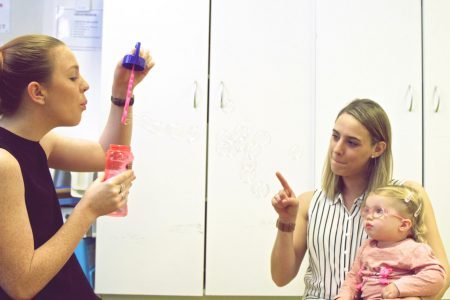
- Use a gesture and a word at the same time.
- Whenever your child uses a gesture to communicate, acknowledge it and praise them.
- Point to objects or use gestures throughout the day when interacting with your child.
When should I use gestures/KWS with my child?
- For all children learning at an early language stage
- If your child is having difficulty expressing themselves the use of KWS will give them some control of their expressive communication.
- If your therapist discusses with you the need to assist your child in expressing themselves with gestural cues to assist their language acquisition.
At Therapies for Kids we work as a transdisciplinary practice and all therapists will use key word signing if it is indicated to help a child they’re working with communicate and develop early language.
I hope the information provided above is of use. If you have any further questions, please contact your GP or a speech pathologist.
Take care at this time of social isolation.
Deb