Pretend play is important throughout life and starts in infancy. As adults, we are constantly using imagination to solve problems, invent new things, enjoy a book or movie, to come up with ideas, and think creatively.
Albert Einstein said, “Imagination is more important than knowledge.” “Logic will get you from A to Z; imagination will get you everywhere.”
Five reasons to encourage pretend play:
1. To encourage imagination and creativity:
- Builds a child’s ability for flexibility and then creativity.
- How to think for themselves.
- Helps children understand another point of view.
2. Supports social and emotional development:
- As they pretend to be different people or control objects, they are practicing social and emotional roles of life.
- They learn how to walk in someone else’s shoes – often mum or dad.
- Develop self-esteem and self-awareness.
- Learn how to recognise and respond to others feelings when involved in group imaginary activities.
3. Improves language and communication skills:
- They learn new language that they might not encounter every day.
- It’s fun and provides opportunities for discussion.
- Gives them control and can help decrease anxiety as language becomes more familiar.
- They have to communicate their thoughts to others – an essential social skill.
4. Develops thinking, learning, and problem-solving abilities:
- By the nature of pretend play, children are presented with problems and scenarios to solve or plan.
- How to cope/change when something doesn’t go to plan in a game.
- Develop their memory.
- Abstract thinking – when an object/person takes on a different meaning.
5. Enhances physical development:
- Often physical – e.g. being an aeroplane, climbing ladders as a fire fighter, etc.
- Fine motor skills developed while feeding and dressing a doll.
- Learning about rough and tumble and limits.

How to encourage pretend play:
- Play together face to face so your child can copy your gestures/pretend actions.
- Follow your child’s lead – play with things your child is interested in.
- Keep it simple – repetition is fun.
- Take turns – the play becomes a “conversation.”
- Choose the right toys.
- Introduce new ideas when they can link ideas together – e.g. if they like to play with cars, take them to the mechanic.

Benefits of pretend play:
- Allows you new ways to connect with your child.
- You can follow their lead and join in with their interests.
- Motivating and connecting for all involved.
- Helps your child think symbolically.
- Develops critical thinking.
Toys for pretend play:
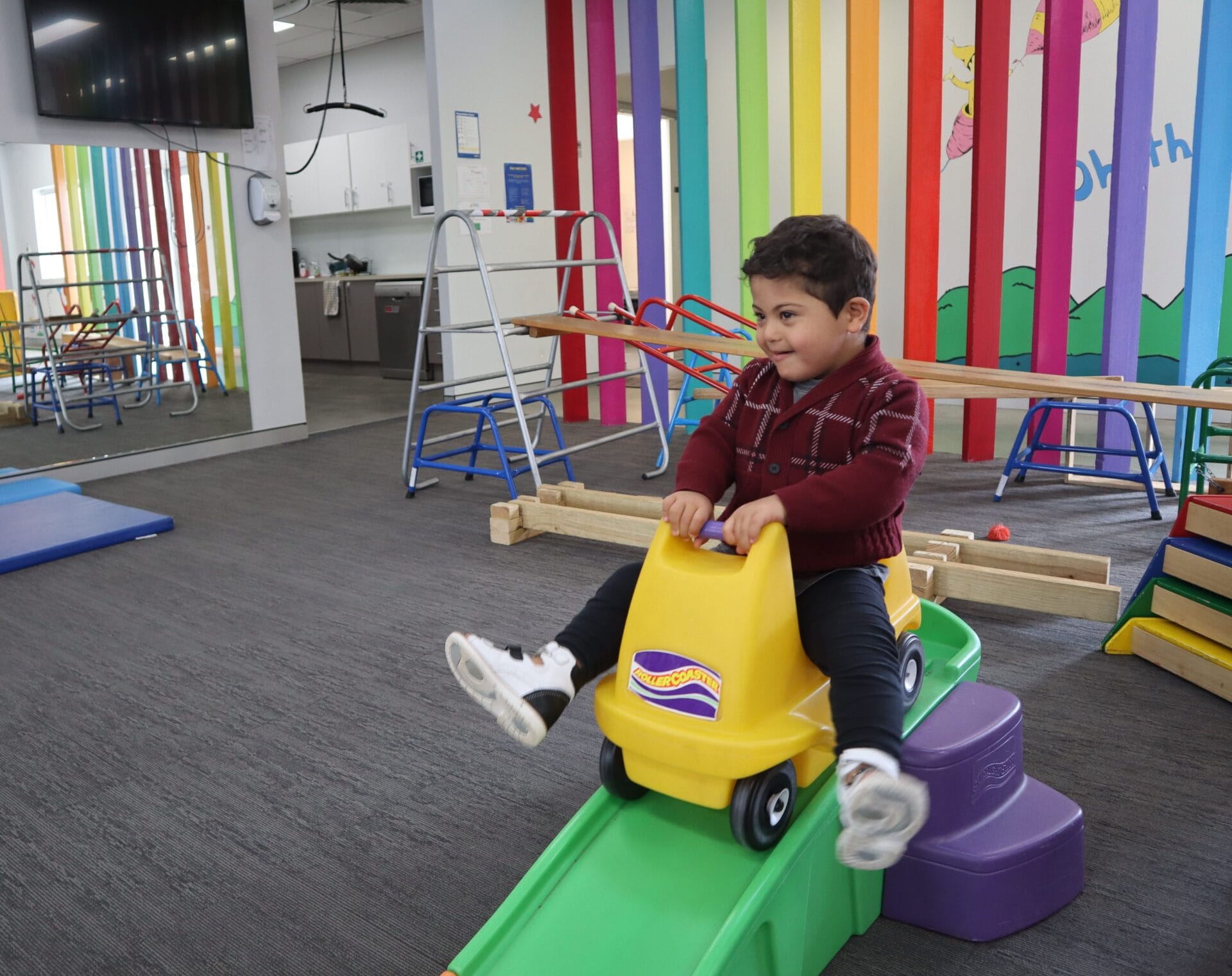
- Vehicles (not just for boys!) Common in children’s lives – so good for simple pretend. They can put a driver in and go to the mechanic. Use a shoe box to make a car/bus.
- Playdough – In early play, make simple/familiar objects. Later, make food for the tea set, make roads, etc.
- Costumes and props – old hats/shoes/scarves/coats. Bags/briefcase/boxes for store/shop, etc.
- Favourite stuffed animal or doll – great for feeding and pretending real life situations.
- Puppets – moving parts help them come to “life.” Encourages joint/peer play in older children.
- Blocks and lego – initially might build simple and familiar objects (e.g. house/car). Later might “pretend” that individual blocks are something real (e.g. a bed/food for animals, etc.).
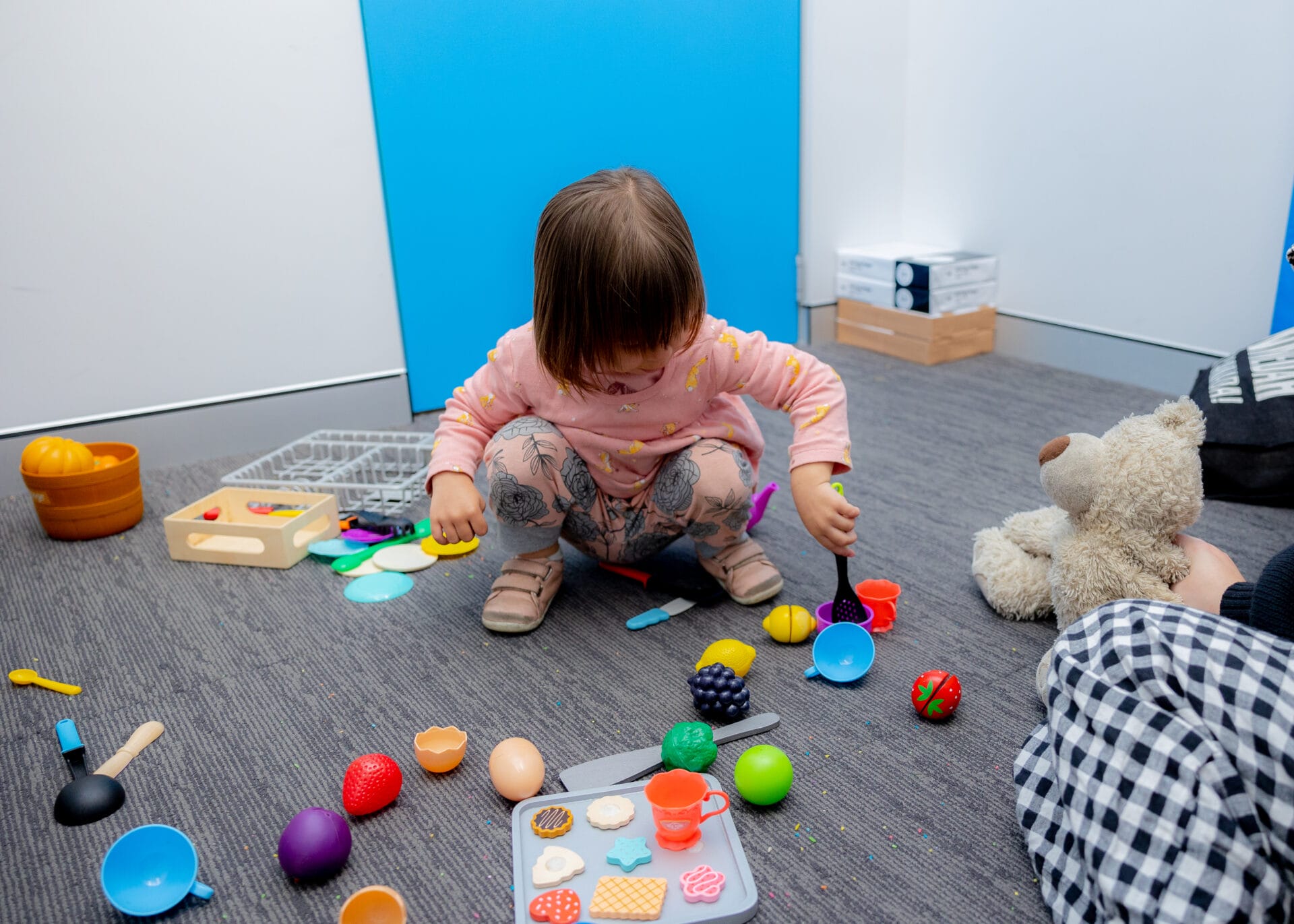
- Toy food/dishes/groceries – initially feed the animal, later then a restaurant, have a tea party.

Things to look for if your child is not playing in different ways:
- Not copying simple actions.
- Not exploring the environment.
- Difficulty with sharing objects and attention.
- Unable to take turns.
- Finds it difficult to imagine others’ feelings and thoughts.
All children differ in their thinking and learning styles that they can build on. Often you can play with their strengths and slowly build on their variety of play. If you are concerned about your child’s play, speak to your preschool teacher/other carers, GP, paediatrician, or an occupational therapist or speech pathologist.
Pretend play should be fun. When children let their imaginations take over and play together there are no limits to where their minds will go and the enjoyment they will have.
Stay safe, happy, and well.
Deb