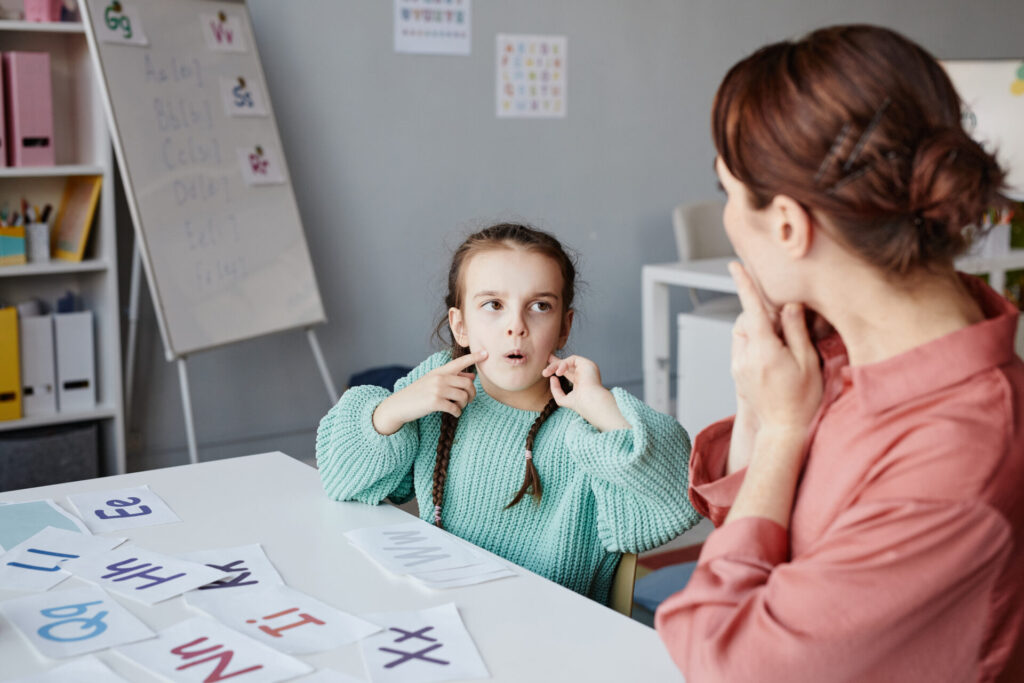
It’s one of the questions we hear most often from parents: “Why does my child love being upside down but hate having their hair washed?”
Maybe your child covers their ears at the shopping centre. Maybe they can’t sit still at the dinner table, or they gag at the texture of anything soft. Maybe they seem completely fine at daycare and then fall apart the moment they get in the car.
If you’re reading this at the end of a long day, here’s the short version: none of this is naughty behaviour, and it’s not something you’ve caused. It’s usually a child’s nervous system telling you how they take in the world, and once you can read that, a lot of things start making more sense.

What is sensory processing?
Sensory processing is how the brain receives information from the body and the environment, makes sense of it, and decides what to do about it. It happens constantly for all of us, and usually without us noticing.
Most of us learn about five senses at school. There are actually eight, and the three less familiar ones are often the most relevant when it comes to children:
The five we all know
- Sight, light, movement, colour and detail. Bright or flickering lights, and cluttered spaces, are the common sticking points
- Sound, noise coming in and noise the brain has to filter out. Hand dryers, assemblies and busy classrooms are the usual culprits
- Touch, texture, temperature and pressure. Think clothing tags, seams and socks, or a child who wants to touch everything
- Taste, flavour, which works closely with smell and often sits behind a narrowing food range
- Smell, the fastest sense to trigger a reaction, which is why a food can be refused before it reaches the table
For most children these five work quietly in the background. That is part of why the three less familiar senses tend to explain more of what puzzles parents.
The extras
- Proprioception is the sense of where your body is in space, and how much force you are using. It is how you can touch your nose with your eyes closed, or hold an egg without crushing it. In children, it is the sense behind crashing, climbing, squeezing and bear hugs
- Vestibular is the sense of movement and balance, driven by the inner ear. It is what tells you that you are spinning, tipping or upside down. It is why one child will spin until they fall over and another will not go near a swing
- Interoception is the sense of what is happening inside your body. Hunger, thirst, needing the toilet, a racing heart, the early signs of feeling upset. It is what lets a child notice a feeling early enough to do something about it
These three do a lot of quiet work in the background, and they explain much of what can look puzzling from the outside: the child who cannot sit still, the child who is frightened of the slide, the child who does not notice they are hungry until they are already distraught.
Every child processes this information a little differently. Some need more input before their brain registers it. Others receive it far more intensely than the people around them. Both are differences in wiring, not in effort or attitude.
What happens when sensory processing is different for children?
Sensory differences rarely stay in one place. They tend to show up in the moments that make up an ordinary day.
We all need to be constantly processing sensory information so that we can manage the demands of everyday life. For all of us, some days this is harder than others. For some children, it is much more difficult to process that input successfully, and the effort it takes shows up everywhere else.
Regulation
Regulation is the ability to manage your energy, attention and emotions so that they match what you are doing. It takes effort, and sensory input either supports it or works against it.
A child whose nervous system is over- or under-stimulated has less capacity left for managing big feelings. What looks like a meltdown over a small thing is often the last straw at the end of a sensory-demanding day.
Learning and attention
Attention is what lets a child hold on to information long enough to learn from it. It is a limited resource, and managing sensory input draws from the same pool.
It’s hard to concentrate on a classroom task when the fluorescent lights are humming, the chair is uncomfortable, and your body is asking to move. Children who are working hard to manage sensory input have less attention available for everything else.
Everyday routines
Being able to process sensory information smoothly is what allows a child to move through the ordinary sequences of a day without each one becoming a negotiation.
Getting dressed, brushing teeth, washing hair, sitting down to eat. Many of the daily routines that cause friction at home are, underneath, sensory experiences. Understanding that changes the conversation from “why won’t you” to “what’s making this hard.”
Social connection
Connection is where so much of childhood happens, and it usually happens in the loudest, busiest places available.
Busy playgrounds, noisy birthday parties and crowded classrooms can be overwhelming. Some children pull back from these settings, not because they don’t want to be there, but because the volume of it is too much to manage.
This is why we don’t say “they’ll grow out of it.” Understanding the way a child’s system works early doesn’t mean labelling them. It means the adults around them can adjust the things that are adjustable, and support the child through the things that aren’t.
Sensory seeking and sensory avoiding: what it looks like
Broadly, children tend to look for more of a certain kind of input, which we call sensory seeking, or work to get away from it, which we call sensory avoiding. Most children do a bit of both, in different ways, at different times of day.
A child who seeks input might
- Crash, jump, climb, spin and bump into things constantly
- Chew on clothing, pencils, sleeves or hair
- Touch everything and everyone, and stand very close to people
- Be constantly on the move, or fidget when asked to sit still
- Love being squeezed, wrapped up tightly, or buried under cushions
- Prefer strong flavours and crunchy textures
A child who avoids input might
- Cover their ears at hand dryers, vacuums, blenders or assemblies
- Find clothing tags, seams, socks or certain fabrics unbearable
- Resist haircuts, nail cutting, teeth brushing or hair washing
- Be cautious on playground equipment, swings or escalators
- Eat a narrow range of foods, often avoiding wet or mixed textures
- Become overwhelmed in busy, bright or noisy environments
Some children don’t seem to register input at all. They may not notice a scraped knee, seem unaware of a full nappy, or not respond when their name is called from across the room. This is sometimes described as low registration, and it is just as valid a pattern as the other two.
Behaviour and your child's sensory needs
It’s worth saying plainly: sensory responses are not misbehaviour. A child who runs out of a noisy hall is not being defiant. A child who refuses the dinner you’ve cooked is not being rude. A child who can’t stop moving is not choosing to ignore you.
Watching what a child does is often the clearest window into what their body is asking for. Behaviour is how children tell us something before they have the words, and often when the words are not enough.
Some of those behaviours are genuinely hard to live with. Kicking, hitting and throwing hurt other people. Loud noises and constant movement make it hard for everyone else to concentrate. None of that has to be accepted, and none of it means the child is being naughty.
The shift that helps most families is this. Before reaching for a consequence, ask what input your child is chasing or escaping, then offer a safer way to get it. A child who crashes into their sibling may be looking for deep pressure through their muscles and joints, so wall pushes, a weighted blanket or carrying the shopping can meet the same need. A child who covers their ears and bolts is telling you the room is too loud, so ear defenders or a quieter corner will do more than a reminder to stay put.
The boundary still stands. What changes is that the need underneath the behaviour gets met, so the behaviour has less work to do.
Sensory needs are a form of communication, and they’re often the loudest one a child has. When we respond to the need rather than the behaviour, most families notice things start to settle. Not always quickly, but meaningfully.
You may also see the term Sensory Processing Disorder online. It’s worth knowing that this is not currently a standalone diagnosis in the major diagnostic manuals, though sensory differences are well recognised in clinical practice and are very commonly part of the picture for children with ASD and children with ADHD. An occupational therapist can help you understand what’s happening for your child, regardless of whether a diagnosis is part of your family’s path.
What you see: signs that may be worth an OT opinion
Every child has sensory preferences, and having a few of these is entirely normal. The following are commonly recognised as signs that an occupational therapy assessment may offer useful clarity:
- Sensory responses are getting in the way of everyday routines like dressing, eating, sleeping or bathing
- Your child regularly becomes distressed in ordinary environments such as shops, parks, classrooms and family gatherings
- Mealtimes are consistently difficult, or the range of accepted foods is shrinking
- Your child seems to need constant movement to function, or tires very quickly with physical tasks
- Big emotional responses that seem out of proportion, particularly at the end of the day
- Difficulty with fine motor tasks such as pencil grip, cutlery, buttons and scissors
- Your child is avoiding activities their friends enjoy, or withdrawing from social settings
- Sleep is consistently hard to settle into
- You or your child’s educators have noticed something that feels harder than it should be
None of these alone confirm anything. They simply indicate that an assessment may help you understand what’s going on and what may genuinely help.

What does occupational therapy offer my child and family?
The goal of sensory-informed occupational therapy is not to make a child tolerate everything, or to train sensory differences out of them. Those differences are part of how your child is built.
The goal is participation and comfort, helping a child do the things they want and need to do, with strategies that work for their nervous system. That usually involves:
- Understanding your child’s individual sensory preferences, through play and observation
- Building strategies into daily routines, so they’re practical rather than an extra task
- Working on the underlying skills such as motor planning, coordination and body awareness
- Adjusting the environment at home, at daycare and at school, where that’s possible
- Supporting regulation, so children have more capacity for learning and connection
- Coaching parents and educators, so the support continues well beyond the session
Seeking an assessment doesn’t change your child. It provides clarity, either reassurance that what you’re seeing is within the typical range, or an early, supportive start where extra help would make a difference.
Some sensory-friendly tips to try at home
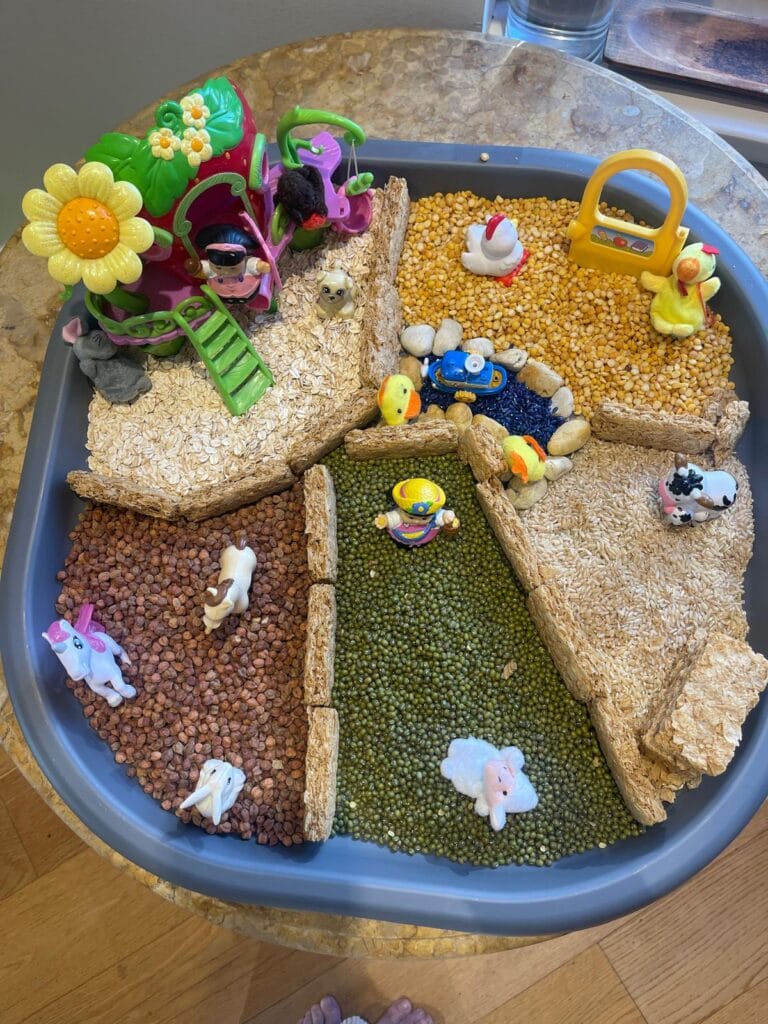
You don’t need specialised equipment to support your child’s sensory needs. Most of what helps is a small adjustment to something you’re already doing.
Offer heavy work
- Carrying the shopping, pushing the washing basket, animal walks, wheelbarrow races and monkey bars all provide deep proprioceptive input
- This kind of activity is calming for most children, whether they seek input or avoid it
Move before you sit
- Ten minutes of active play before homework, dinner or a car trip often works better than asking a child to settle from standing still
- Build it in before the moment you need calm, not after things have unravelled
Preparing your child before transitions
- A countdown, a visual timer, or a simple “two more turns then we’re going” gives the nervous system time to prepare
- Surprise changes are much harder to manage when a child is already working hard to cope
Adjust what you can adjust
- Cut out tags, buy seamless socks, offer ear defenders for noisy places, dim the lights at bedtime
- Removing an unnecessary sensory demand isn’t giving in. It frees up capacity for the demands that can’t be removed
Create a low-demand space
- A quiet corner with cushions, a beanbag, a blanket or a pop-up tent gives a child somewhere to reset
- Let them go there before they’re overwhelmed, not only as a response to distress
Follow their lead with food
- Keep new foods on the table with no pressure to eat them. Exposure builds familiarity over time
- Touching, smelling and playing with a food are all real steps forward, even if nothing is eaten
Watch for the build-up
- Most sensory overload has a lead-in: more movement, a shorter fuse, going quiet, covering ears
- Learning your child’s early signs lets you step in before the moment it tips over

Therapies For Kids provides expert support for sensory processing and regulation
When families understand how their child takes in the world, daily life usually gets easier. Not because the child has changed, but because the strategies around them finally fit. Parents often tell us the biggest shift is simply knowing what they’re looking at.
At Therapies For Kids, our occupational therapy assessments start with getting to know your child through play, everyday routines, and conversation with you as their parent or carer. From there, we build a plan together, so you understand what we’re working on and why, every step of the way.
There’s no need to have all the answers before reaching out. A conversation with our team is often the simplest first step.
Enquire online or call us on (02) 9519 0966 for more information.
This article is general in nature and does not replace individual clinical assessment. If you have specific concerns about your child's development, please speak with a qualified occupational therapist or your GP.
Acknowledgement
This article was developed for Deb’s Blog and is based on the clinical expertise, whose evidence-informed insights and detailed review helped ensure the content reflects current best practice in speech pathology.
References
- Raising Children Network (Australia), Sensory processing and sensory differences: https://raisingchildren.net.au/autism/health-wellbeing/health-management/sensory-sensitivities-asd
- STAR Institute, Understanding sensory processing: https://sensoryhealth.org/basic/understanding-sensory-processing-disorder