What do we mean by core strength?
The core is the group of muscles that hold the trunk steady: the deep abdominals, the muscles along the spine, the diaphragm, the pelvic floor, and the muscles around the shoulder blades and hips. Their job is not to lift heavy things. Their job is to provide a stable base, so that we can move symmetrically, with accuracy, and with minimal fatigue.
I like to describe these as our postural muscles, and I always come back to alignment. If your core is working well, your body is aligned, and every other movement can be organised from there. Think of it as the foundation everything else is built on. When the foundation is steady, the arms, hands and legs are free to do their job. When it isn’t, a child spends energy just holding themselves upright, and there’s less left over for writing, listening or sitting through a story.
What might we see?
This is the part that surprises parents. Core stability sits underneath all our movements and everyday skills, so when it’s not working optimally, the effects show up somewhere else entirely.
- Handwriting and fine motor. An unstable trunk and shoulder make it much harder for the fingers to do small, controlled movements.
- Sitting tolerance. Staying upright on a chair for twenty minutes is genuinely tiring if your postural muscles fatigue quickly.
- Attention. Effort spent on staying upright is effort not spent on the task. This is often misread as not concentrating.
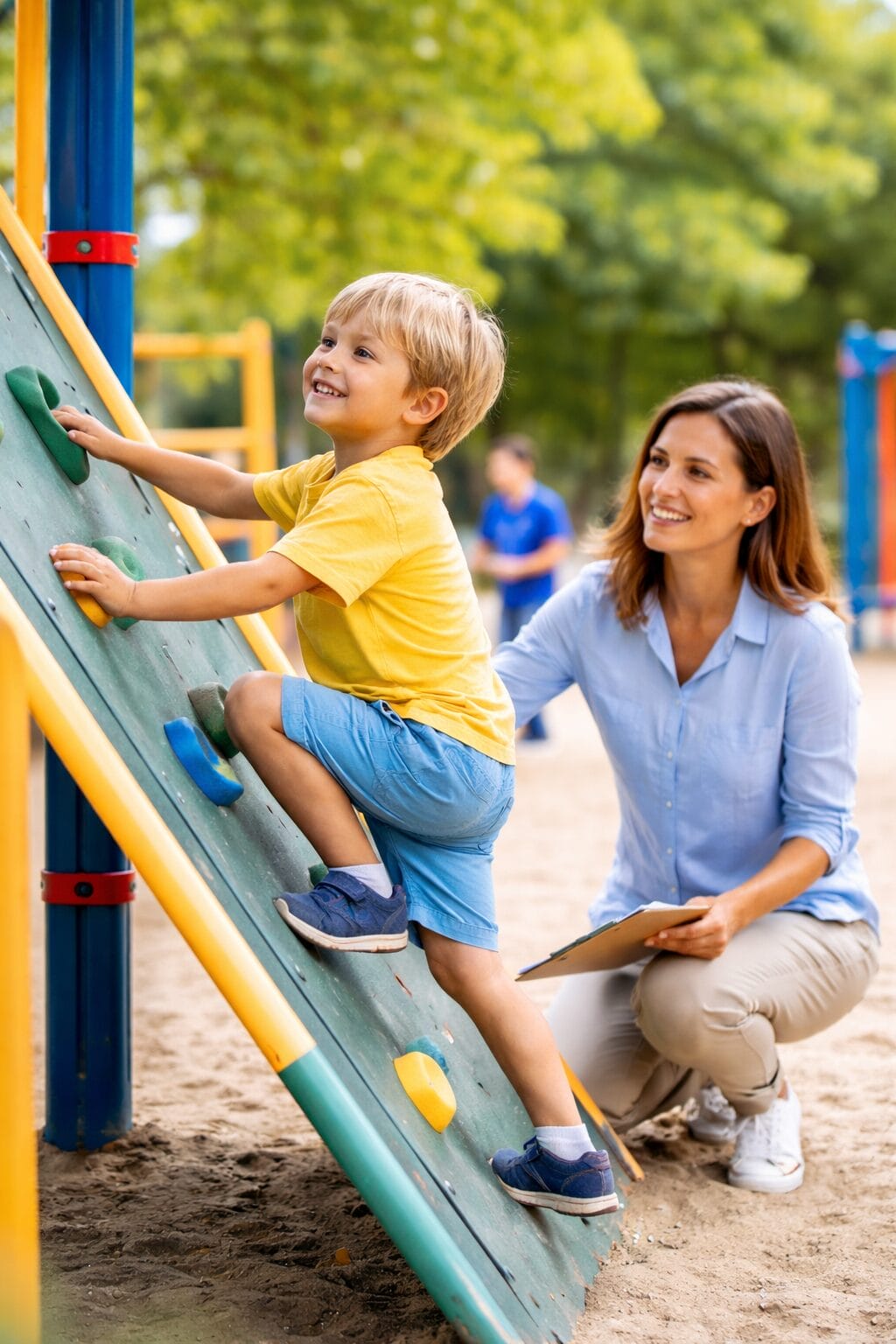
- Playground confidence. Climbing, hanging and monkey bars all ask a lot of the trunk, so some children quietly opt out.
- Gross motor skills. Jumping, hopping, stairs, riding a bike and catching all rely on a steady middle.
- Mealtimes. Sitting at the table takes postural work too, which is one reason some children slide off their chairs by the end of dinner.
What you may have noticed
Nobody spots core strength directly. What you see is the workaround, which is usually a child finding a way to borrow stability from somewhere else.
- Slumping, propping their head on a hand, or lying across the table while working
- Lying on the floor to draw or play, rather than sitting up
- Leaning on furniture, walls or people when standing
- Sitting in a W shape, wrapping their legs around the chair legs, propping their feet on the table, or crossing their legs to lock themselves in
- Wriggling and changing position constantly, or falling off the chair
- Tiring quickly on walks, or asking to be carried more than you’d expect
- Avoiding climbing equipment, or being cautious about anything off the ground
- Handwriting that starts neatly and deteriorates down the page
- Difficulty learning to ride a bike
Is a weak core the answer to all motor issues?
Core strength has become a bit of a catch-all, and it’s worth being aware of that. Not every child who fidgets or slumps has a weak core. A weak core may be part of why your child is showing some of the things you’ve noticed, but often it’s just one part of the puzzle.
Several different things can look identical from the outside. Low muscle tone is not the same as muscle weakness, and neither is the same as poor endurance, where strength is fine but fatigue arrives early. A child may also have the strength and simply not have the motor planning to organise their body efficiently. Sensory factors matter too: some children move constantly because their body is seeking input, not because they can’t hold still.
Those distinctions change what actually helps, which is why a proper assessment is worth more than a general program of exercises. W-sitting is a good example. Not all children who W-sit have a weak core, but it can mean a child is looking for a wider, more stable base. So we look for other clues to see whether a weak core might be part of the reason.
What helps, and what it looks like at home
Core work for children should look like play, not exercises. The good news is that almost everything that builds trunk stability is already fun.
Get them off their bottom and onto their tummy
- Colouring, puzzles, reading or screen time while lying on their tummy, propped up on their elbows
- Ten or fifteen minutes of this most days does more than a set of formal exercises
Weight through the arms
- Animal walks: bear, crab, worm and wheelbarrow walks
- Crawling through tunnels, under tables and over cushions
- Tug of war
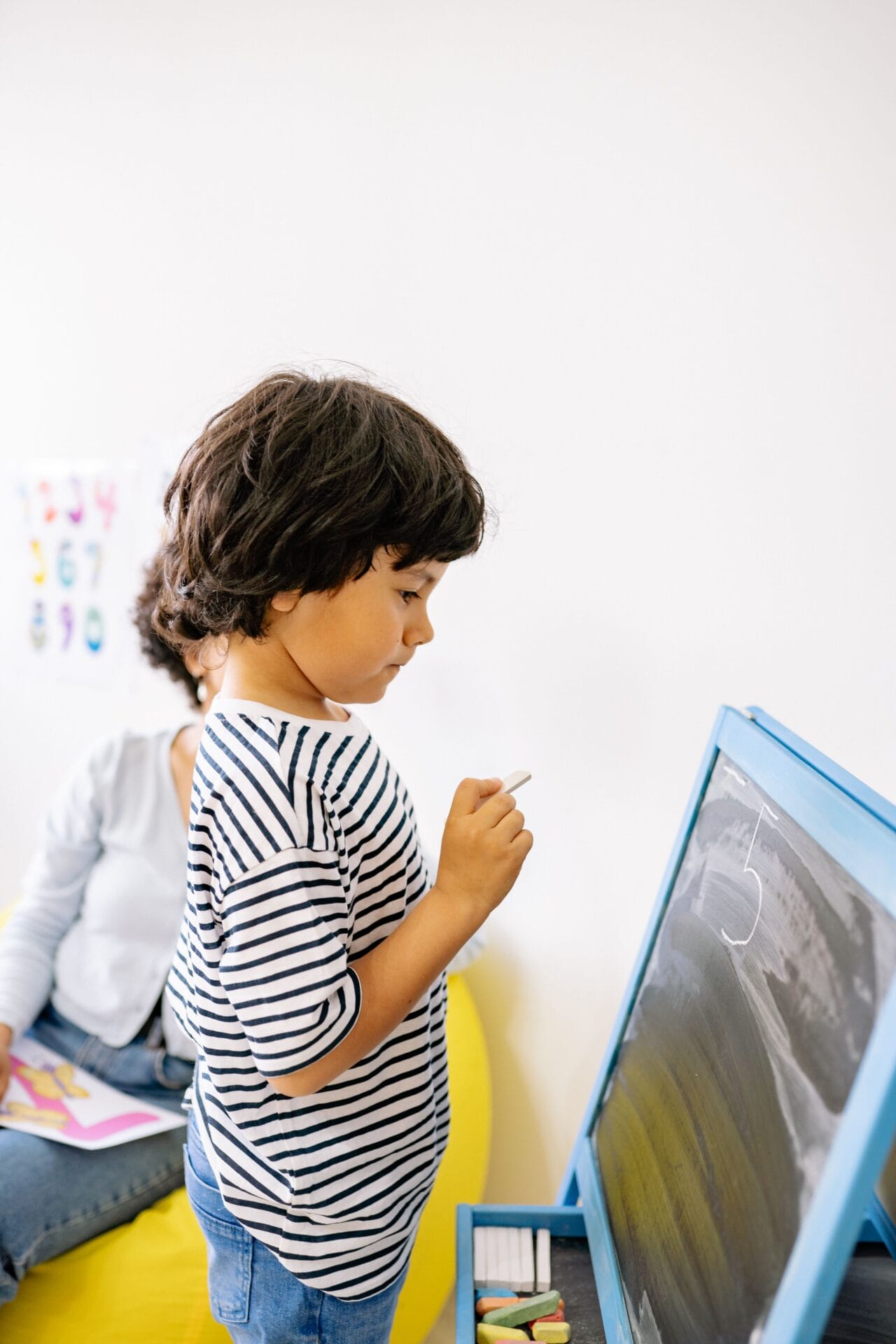
- Writing or drawing on a whiteboard, easel or wall
- Carrying in the shopping and helping to unpack it
- Hanging from monkey bars or a bar, even just holding on
- Climbing at the playground, up slides, over rocks, up the climbing frame
Unstable surfaces and big movement
- Sitting on a therapy ball or roller to do a tabletop task
- Scooter boards, both lying on the tummy and sitting
- Bike riding, swimming and trampolining
- Obstacle courses built out of cushions, boxes and furniture
Activities that cross the midline
Reaching and twisting across the body works all the abdominal muscles, including the ones that rotate the trunk.
- Picking up beanbags or toys from one side and posting them into a bucket on the other
- Cross-crawl marching: right elbow to left knee, then swap
- Drawing big sideways figure-eights on a whiteboard, or with a ribbon in the air
- Sitting back to back and passing a ball around the body
- Windmill toe touches: right hand to left foot, then swap
Set the chair up properly
This one is easy and often makes the biggest immediate difference. When a child’s feet dangle, they have to stabilise themselves with their trunk, which is exactly what they find hard.
- Feet flat on the floor, or on a box, step or stack of books. This is especially important when toilet training, too.
- Hips, knees and ankles at roughly right angles
- Table at about elbow height when they’re sitting up
- A sloped surface, like a folder under the page, can help writing posture
When it's worth getting an opinion
Plenty of children slump at the table sometimes, and most of them are fine. It’s worth asking someone when the pattern is persistent and it’s getting in the way.
- Your child avoids physical play that other children their age enjoy
- Fatigue is affecting the school day, or homework falls apart quickly
- Handwriting or fine motor skills are not keeping pace with the rest of their learning
- Your child was late to sit, crawl or walk, or has always seemed floppy or unusually stiff
- A teacher or educator has raised posture, endurance or sitting tolerance
- Your child complains of aching, particularly in the legs or back, after ordinary activity
- A physiotherapist will look at strength, tone, endurance and movement quality, and work out which of those is the actual issue. Where handwriting, seating and classroom participation are involved, an occupational therapist often works alongside them. What you get out of it is a plan aimed at the right thing, rather than a general set of exercises.
How can we help?
Core strength is one of those things that is much easier to sort out when you know which part of it is actually the problem. Our physiotherapists and occupational therapists assess that through play and everyday tasks, then build a plan with you that fits into your week rather than adding to it.
You don’t need to have it all worked out before you get in touch. A conversation with our team is usually the simplest first step.
Enquire online or call us on (02) 9519 0966 for more information.
This article is general in nature and does not replace individual clinical assessment. If you have specific concerns about your child's development, please speak with a qualified occupational therapist or your GP.
Acknowledgement
This article was developed for Deb’s Blog and is based on the clinical expertise, whose evidence-informed insights and detailed review helped ensure the content reflects current best practice in speech pathology.
References
The Royal Children’s Hospital Melbourne, Kids Health Info: https://www.rch.org.au/kidsinfo/
Raising Children Network (Australia), Physical development: https://raisingchildren.net.au
Australian Physiotherapy Association, Paediatric physiotherapy: https://australian.physio