What are fine motor skills?
Fine motor skills are the movements that let us use our hands to manipulate objects: picking up a pea, doing up a button, holding a pencil, turning the page of a book. To do these things well, all the muscles in the hands, wrists and fingers need to work together in a beautifully coordinated way.

How many muscles are involved?
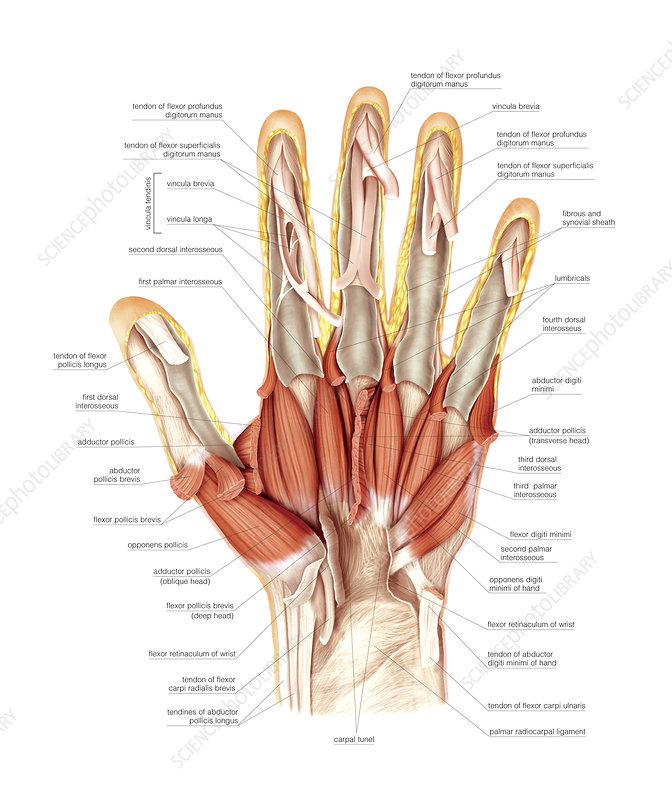
Quite a few! Around 34 muscles work together to move each hand and its fingers, and they’re divided into two groups.
The intrinsic muscles sit entirely within the hand itself. They fall into three groups:
- the muscles of the thumb
- the muscles of the little finger
- the muscles in the palm, which control bending and straightening the fingers
The extrinsic muscles sit in the forearm and wrist, with long tendons that stretch down into the hand to give it control.
ASKLEPIOS MEDICAL ATLAS/SCIENCE PHOTO LIBRARY
For our children to perform all the fine, fiddly tasks they need each day, these muscles need to be strong, flexible and able to work as a team. Some of the key movements they rely on include:
- Pincer movements: using the thumb with the first and second fingers to pick up small things
- Pinch strength: holding on firmly between thumb and fingers
- Finger isolation: moving one finger on its own, like pointing or pressing a button
- Gross grasp: a whole-hand grip, like holding a cup
- Thumb opposition: moving the thumb across the palm to meet the other fingers
- Stability of the arches of the hand: giving the hand its shape and control
- Dexterity: skilfully manipulating objects
What else is needed for fine motor skills?
Using our hands is a surprisingly complex task, and it calls on other systems of the body and nervous system for support. These include core stability, the strength and position of the shoulder and elbow (we call these the proximal joints), motor planning, the sensory system, and gross motor skills. All of these work together to give the coordination needed to complete tasks successfully.
When our occupational therapists are developing goals to support your child, they look at all of these systems, not just the hands.
How do these skills develop over time?
Every child develops at their own pace, so think of the table below as a general map rather than a strict timetable. Alongside each stage, I’ve included some signs that a child may be finding things tricky and might benefit from a chat with an OT.
|
Age |
Fine motor skills you might see |
Signs your child may need support |
|
Birth to 6 months |
• Reflex grasp • Voluntary grasp of objects, often with two hands • Reaches for and bats at objects (3 to 4 months) • Palmar (whole-hand) grasp (5 to 6 months) • More controlled reach (6 months) |
• Not showing interest in toys • Not able to play independently |
|
6 to 12 months |
• Puts objects in mouth • Drops objects with control • Develops pincer grasp: thumb and two fingers, then thumb and index finger • Finger isolation (9 to 10 months) • Transfers objects between hands (around 8 months) • Drops a toy and looks for it • Claps hands (8 to 10 months) |
• Weak finger strength • Delays in early self-care • Delays in sensory development • Delays in play |
|
1 to 2 years |
• Builds a tower of 2 to 3 blocks • Takes rings off a stacker (12 months), puts them on (15 months) • Scribbles • Turns pages of a board book • Self-feeds with fingers; starts using a spoon or fork • Drinks independently from a cup • Threads large beads (around 18 months) • Puts in knob puzzle pieces • Undoes velcro |
• Delays in self-care • Delays in manipulating objects |
|
2 to 3 years |
• Turns single pages of a book • Holds a crayon with thumb and fingers (not a fist) • Imitates vertical and horizontal pencil strokes • Does up velcro • May snip with scissors • Unbuttons large buttons • Eats independently with utensils • Unzips large zips |
• Delays in self-care • Delays in pre-writing skills • Frustration when trying to manipulate small objects |
|
3 to 4 years |
• Usually has a dominant hand; uses the other hand to stabilise • Copies a circle and a cross • Makes objects with play dough • Snips paper with scissors • Unzips clothing • Buttons large buttons, then does this while wearing clothes • Begins lacing (around 4) |
• Delays in pre-writing skills • Difficulty with self-care such as feeding and dressing |
|
4 to 5 years |
• Cuts along a straight line • Writes numbers • Copies letters • Dresses and undresses independently • Helps with simple cutting and food preparation |
• Difficulty holding a pencil • Poor handwriting • Fatigue • Frustration or avoidance |
|
5 to 6 years |
• Cuts out simple shapes • Copies a triangle • Colours within the lines • Three-fingered grasp of a pencil |
• Difficulty forming letters • Poor handwriting • Frustration or avoidance |
|
6 to 7 years |
• Writes on lines • Builds Lego with small pieces • Ties shoelaces • Writes most letters correctly |
• Slow getting ideas onto paper • Tires during handwriting tasks • Poor legibility • Impact on self-esteem |
|
7 to 8 years |
• Writes a legible story • May start playing an instrument |
• Difficulty completing handwriting tasks • Avoids writing • Impact on academic achievement |
What can an occupational therapist do to help?
Our OTs will develop a plan for your child based on your goals as a family. These might include improving self-care skills, writing, or manipulating small objects like Lego and puzzles. Depending on your child’s needs, this may involve:
- Therapeutic activities to build hand strength, coordination and control.
- Handwriting skills, working on the speed, fluency and legibility of your child’s writing.
- Sensory motor skills. Sensory input is essential for fine motor development. A child needs to know where their hands and fingers are in space (proprioception), feel the difference between objects (tactile discrimination), and plan how to use objects in their hand (motor planning).
- Adaptive strategies. Our OTs may suggest assistive devices or adapted utensils to help your child take part more easily in daily activities.
What you can do at home
Here’s the good news: some of the best fine motor practice happens through everyday play. You don’t need fancy equipment, just a little creativity and some time together.
Play dough play. Play dough is a true OT favourite. Squeezing, rolling, pinching and squashing builds strength right through the small muscles of the hand. Try hiding small beads or coins in a ball of dough for your child to dig out, roll “snakes” and “pancakes”, or use child-safe cutters and rolling pins. Firmer dough makes little hands work harder.
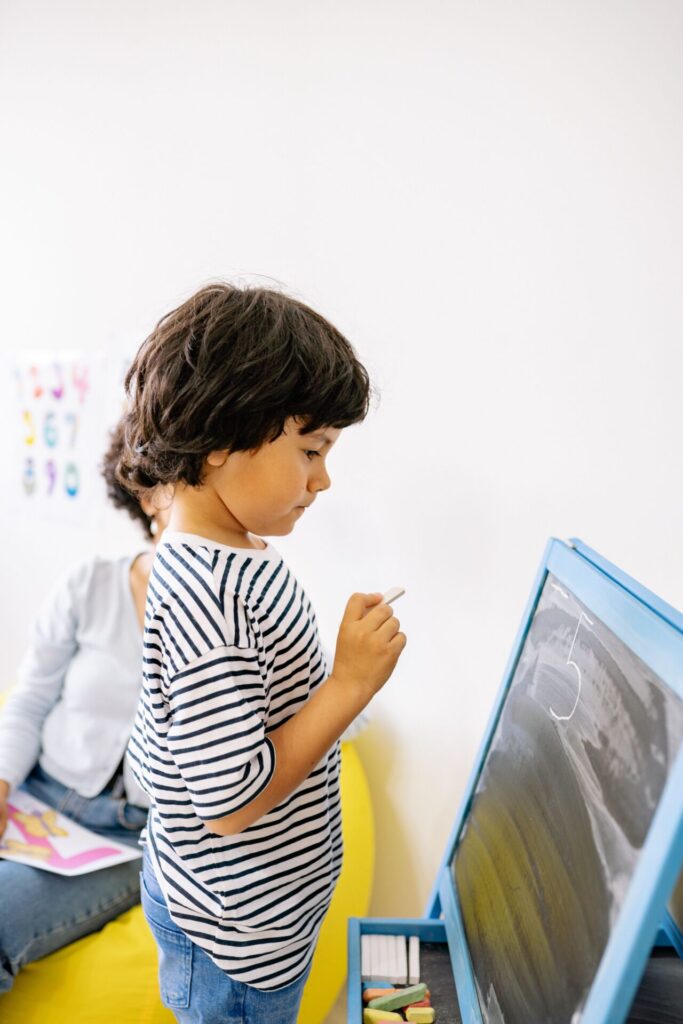
Sidewalk chalk. Drawing on the ground or on a wall works the muscles of the hand and the whole arm, right up to the shoulder. Drawing on a vertical surface, like a fence or an easel, is wonderful because it naturally places the wrist in a good position for writing. Short, broken pieces of chalk encourage a lovely fingertip grasp.
Sticky tape and masking tape. Tearing tape off the roll and peeling it off surfaces is fantastic pincer and finger work. Stick strips of masking tape across the table or floor and have your child peel them off, or tape small toys to a tray for a “rescue mission”. You can also make tape roads for toy cars on the floor.
Strengthening activities. Squeezing spray bottles to water plants, using kitchen tongs or pegs to pick up pom-poms, squeezing sponges in the bath, wringing out face washers, and pushing and pulling heavy objects (like a laundry basket or wheelbarrow) all build strength through the hands and arms.
Sensory activities. Let little hands explore! Sensory bins filled with rice, lentils or sand with hidden treasures to find, finger painting, shaving cream on the table, and cooking together (kneading dough, mixing, stirring) all help children learn how objects feel and how to use their hands.
In-hand manipulation. This is the ability to move objects around within one hand, like shifting a coin from the palm to the fingertips. Try posting coins into a money box one at a time, turning a pencil over to use the eraser, twisting lids on and off containers, or picking up several small items and “storing” them in the palm before dropping them into a cup.
Games for proprioception and sensory integration. Heavy-work activities give the hands and arms great feedback about where they are in space. Animal walks (bear crawls, crab walks, wheelbarrow walking), tug-of-war, climbing at the playground, and push-ups against the wall are all fun options. Games like Jenga, Connect Four, Operation, pick-up sticks and Kerplunk also build control and precision.
Writing activities. Make writing playful. Try writing letters in sand, salt trays or shaving cream, using a paintbrush and water on the pavement, playing dot-to-dots and mazes, writing shopping lists or notes to family members, or using short crayons and golf pencils, which encourage a good grasp.
A gentle safety note: please supervise closely when using small items like beads and coins, particularly with children under 3 or those who still mouth objects.
A few words from Deb
After more than 40 years working with children and families, one thing I know for certain is that every child develops in their own way and at their own pace. Fine motor skills aren’t just about neat handwriting; they’re about independence, confidence, and being able to join in with friends, at school and at home. When a child can do up their own jacket, open their lunchbox, or proudly write their name, it changes how they see themselves.
The most important thing you can do is keep it fun. Little and often, woven into everyday play, makes a real difference. And if you ever have a niggling feeling that your child is finding things harder than they should, trust that instinct. Reaching out early is never a mistake.
Final thoughts
To our amazing team of occupational therapists: thank you. Your creativity, care and dedication help children reach their potential every single day, and we’re so proud to celebrate you this OT Week.
If you’d like to chat about your child’s fine motor development, our OTs would love to help. Get in touch with any of our three Sydney clinics, or visit therapiesforkids.com.au.
Warmly,
Deb
This article is general in nature and does not replace individual clinical assessment. Milestone ranges vary between sources and between children. If you have specific concerns about your child's development, please speak with a qualified physiotherapist, occupational therapist or your GP.
Acknowledgement
This article was developed for Deb’s Blog and is based on the clinical expertise, whose evidence-informed insights and detailed review helped ensure the content reflects current best practice in speech pathology.