Has your child care centre mentioned that your little one needs to be out of nappies before moving up to the preschool room? Or is kindy suddenly feeling very close, and toileting is still a work in progress?
You are definitely not alone. Over the past few months, more and more families have come to us with exactly these worries. Many long day care rooms and community preschools expect children to be toilet trained, or well on the way, before they move up. And by the time children start Kindergarten, being able to manage the toilet on their own makes a big difference to their confidence and independence.
After more than 40 years working with children and families, I can tell you this: toileting is so much more than “using the potty”. It is one of the most complex skills our children learn. The good news is that there is lots you can do at home to build the foundations, long before the nappies come off.
So let’s look at what is really going on when a child learns to use the toilet, what the building blocks are, and plenty of fun ideas to try at home.
What does my child actually need to do to use the toilet?
When you or I go to the toilet, we barely think about it. But for a young child, it is a chain of skills that all have to link together:
- Feel it. Notice the feeling of a full bladder or bowel.
- Recognise it. Understand that this feeling means “I need to go”.
- Know what to do. Tell someone, or get to the toilet, pull pants down, climb up, sit, relax, go, wipe, flush, pull pants up and wash hands.
That takes body awareness, understanding, communication, planning a sequence of movements (we call this motor planning), balance and strength, and fine motor skills. No wonder it takes time!
Many services now talk about “toilet learning” rather than “toilet training”. I really like that. It reminds us that this is a skill our children learn, step by step, at their own pace, with our support.
What is interoception, and why does it matter so much?
You might have heard this word lately. It is a bit of a mouthful, but it is one of the most important pieces of the toileting puzzle.
We all learned at school that we have five senses: sight, hearing, touch, taste and smell. We actually have more. Proprioception tells us where our body is and how it is moving. Our vestibular sense helps with balance. And interoception is our “inside sense”.
Interoception is how we notice what is happening inside our bodies: hunger, thirst, feeling hot or cold, tiredness, a racing heart, butterflies in the tummy, and of course a full bladder or a poo on its way. It is also closely linked with how we feel and understand our emotions.
If a child can’t yet notice those inside signals clearly, it is very hard for them to know when they need to go. Some children don’t feel the signal until it is suddenly urgent. Others feel it very strongly and find it uncomfortable or even worrying.
Interoception develops in all children, but many neurodivergent children, including autistic children and children with ADHD, find it harder. This isn’t laziness or naughtiness. It is simply how their body and brain are working, and it means we need to help them tune in.
Ideas for home: tuning in to the inside sense
- Heartbeat check. After jumping, dancing or running, pop a hand on your chests together. Is it fast or slow? Check again after a rest.
- Tummy talk. Before and after meals, ask “How does your tummy feel? Empty? Full? Rumbly?”
- Cold drink detective. Take a sip of icy water and see if you can feel it going all the way down.
- Think out loud. Name your own body signals in everyday moments: “My tummy feels full and squishy, I think I need to do a poo.”
- Feelings and body. When your child is excited, cross or worried, wonder together where they feel it in their body.
What are the other building blocks for toileting?
Interoception is a big one, but it isn’t the only one. Here are some other things we look at with families.
Is my child comfortable in the bathroom?
Bathrooms can be a lot for little senses! The loud flush, the roar of hand dryers, echoing tiles, a cold seat, strong smells, and the idea of touching a toilet or “germs” can all make a child anxious. Some children also really dislike messy hands, which can make wiping tricky.
Sensory differences aren’t something a child needs to “get over” before they can learn. They are something we understand and plan around.
- Let your child flush once they are off the toilet and standing back, or flush for them at first.
- Try ear muffs or noise-reducing headphones for public toilets, and visit a few just to look, without any pressure to go.
- Play with messy textures in a fun way: playdough, shaving foam, finger painting, helping with baking.
- A padded or cushioned seat cover can take the chill off.
- Let your child choose their own soap or toilet paper.
Does my child understand what the toilet is for?
Children learn by watching. Understanding that everyone uses the toilet, and that wees and poos belong there, is an important first step. It also helps when children notice their friends are learning too. Toileting is a social skill as well as a physical one!
- Let your child come with you or an older sibling to the toilet, and talk about what you are doing.
- Empty poos from the nappy into the toilet together and wave goodbye as they flush away.
- Role play with a teddy or doll: pants down, sit, wee, wipe, flush and wash.
- Read books about toileting together. Favourites include “Everybody Poos” by Taro Gomi and “Whose Poo?” by Jeanette Rowe.
Is my child feeling calm and confident?
Children need to feel safe to try something new. Anxiety about the toilet, falling in, or the sounds and smells can get in the way. In child care, toileting often happens in a group, which some children find overwhelming.
- Have a chat with your child’s educators about how toileting works in the room, and whether your child could go when it is quieter.
- Keep sits short and relaxed. If nothing happens after about five minutes, that’s fine. Off they hop.
- Let your child take a favourite toy or book along.
- Never force sitting or make the toilet a place of punishment.
Is my child’s body ready?
As a physio, this is close to my heart! To sit on the toilet and relax enough to go, children need good sitting balance and core strength. If a toilet is too tall and their feet are dangling, they can feel unsteady and scared, and it is harder to push a poo out.
- Use a toilet insert seat and a sturdy footstool so your child’s feet are flat and their knees are a little higher than their hips. This is the best position for doing a poo.
- Build core strength with fun movement: animal walks, wheelbarrow walking, climbing at the playground, and sitting on a big ball.
- Practise pulling elastic-waisted pants up and down, and choose clothes that are easy to manage. Avoid tricky buttons, zips, belts and overalls.
- Wiping needs a good reach and twist. Try an OT favourite: put a dollop of shaving foam on a balloon or paper plate and let your child “wipe it clean” with toilet paper.
- Practise handwashing as a fun routine, with a song for scrubbing.
How do we get started?
Once the building blocks are coming together, here are the things that help most.
- Toilet timing. Start by offering the toilet often, rather than waiting for your child to ask. Good times are on waking, after meals, before leaving the house, before bath and before bed, and every hour and a half to two hours in between.
- Look for a pattern. Keep a simple record for a week or two of when your child is wet or dirty. You may find their body has its own rhythm, and you can offer the toilet just before.
- Use the after-meal moment. Eating switches on a natural reflex that moves the bowel along (the gastrocolic reflex). Sitting on the toilet 15 to 30 minutes after a meal is a great time to catch a poo.
- Pants, not nappies, during the day. Modern nappies are so good at keeping children dry that they can’t feel when they are wet. Undies or training pants help them connect the feeling with what happened. Keep nappies for sleeps and night time.
- Stay calm about accidents. Accidents are part of learning. Your child needs to be in a place where mess is okay and nobody gets upset. A matter-of-fact “Oops, wees go in the toilet. Let’s get changed” is perfect.
- Water, all day long. We used to suggest a big drink before toilet time. Today, the advice is steady drinks of water spread across the day. A well-filled bladder is easier to feel, and drinking enough keeps poos soft. Please don’t limit drinks to avoid accidents. It doesn’t help.
- Keep poos soft. Fruit, vegies, wholegrains and water all help. Constipation is one of the most common reasons toileting stalls, because a hard or painful poo can make a child scared to go. If your child’s poos are hard, painful or infrequent, please see your GP.
- Pick your moment. Try to start when life is calm, not during a house move, a new baby or a big holiday, and plan a few days at home.
Should everyone use the same words?
Yes, please! Children learn best when everyone is consistent. Agree on your words for wee, poo, toilet and bottom, and share them with your child care centre, preschool, grandparents and anyone else who helps care for your child. If your child uses a communication device or picture system, check that it includes the toileting words they will need.
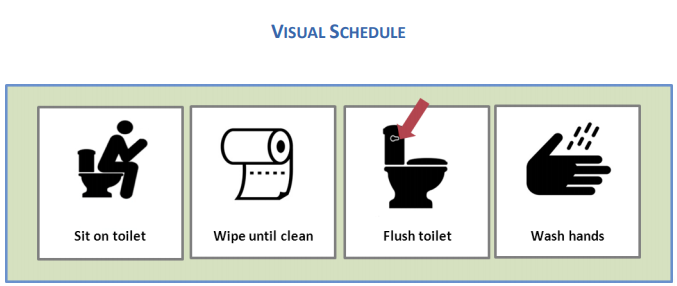
Do visuals help?
Absolutely. Many children find it easier to follow a sequence when they can see it. A simple picture strip on the wall next to the toilet (pants down, sit, wee or poo, wipe, flush, pants up, wash hands) gives them a step-by-step guide. A short personalised story with photos of your child and your own bathroom can also help them know what to expect.
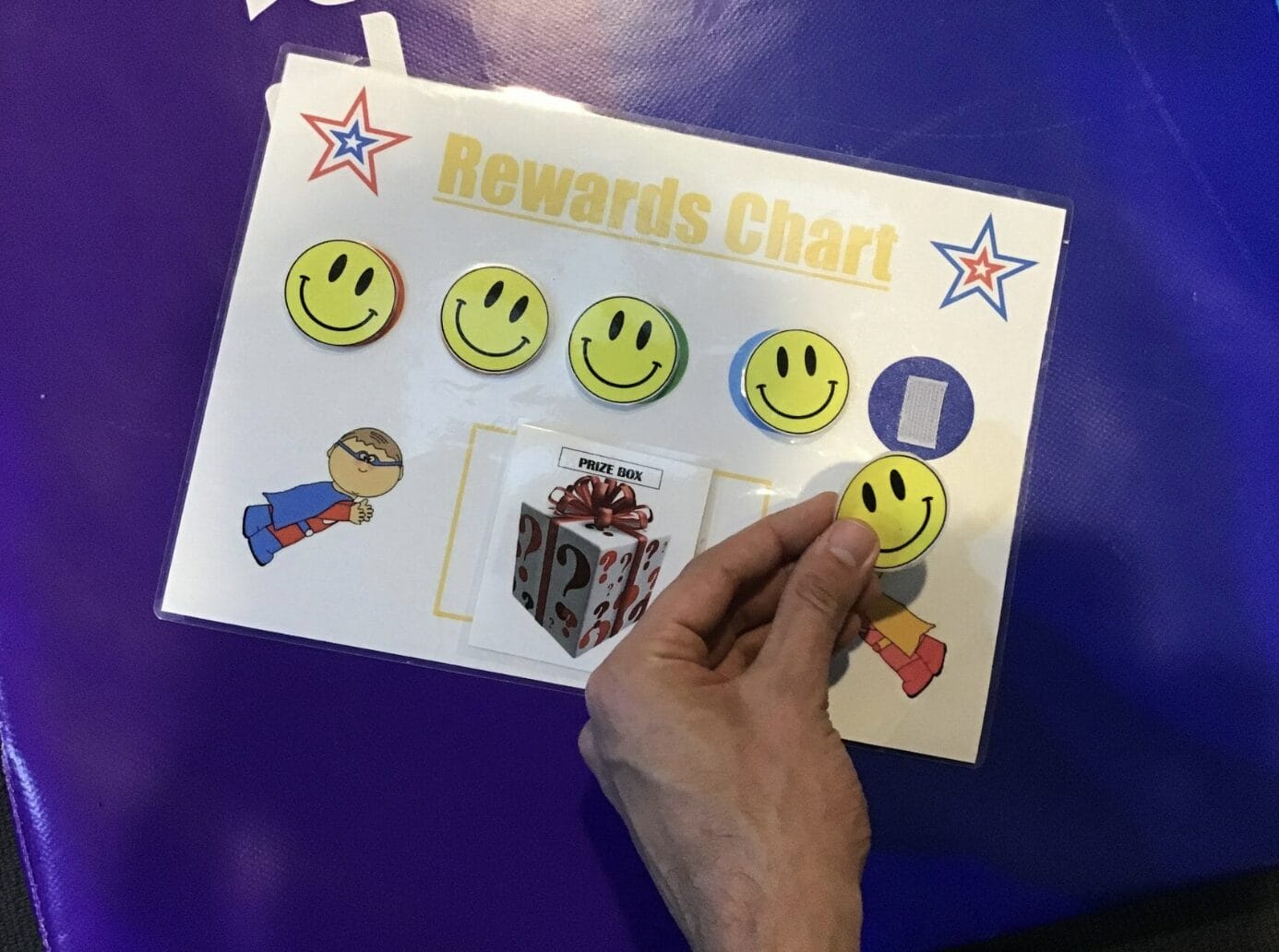
What about sticker charts and rewards?
This is a question I am asked a lot, especially by families of neurodivergent children.
Small, immediate rewards can still be really helpful. A big smile, a high five, a cuddle, or a sticker if your child loves them. Celebrate every step, not just the “big wins”: sitting, trying, telling you, washing hands.
But rewards on their own won’t build interoception, sensory comfort or the physical skills a child needs. If those foundations aren’t there yet, a sticker chart can lead to frustration for everyone. So build the foundations first, and use rewards only if they suit your child. For some children, the best reward is simply getting straight back to their play!
And please, never punish or shame a child for accidents.
What is typical? A guide to toileting milestones
Every child is different, and there is a wide range of normal. This table is a general guide only.
| Age | What you might see |
|---|---|
| 12 to 18 months | Notices being wet or dirty. May go quiet, squat or hide when doing a poo. Enjoys copying adults. A great time to start building the foundations. |
| 18 months to 2 years | Shows interest in the toilet and what others do there. Follows simple instructions. Can stay dry for an hour or two. Helps pull pants down. |
| 2 to 3 years | Many children begin using the potty or toilet with lots of reminders. Starts to tell you during or just before going. Pulls pants down and up with some help. |
| 3 to 4 years | Around 3 is the average age for being dry during the day. Accidents still happen, especially when busy or excited. Needs help with wiping, particularly after a poo. |
| 4 to 5 years | Manages most of the routine independently, including flushing and handwashing. Wiping is still developing. Copes with toilets away from home. |
| Up to 7 years | Staying dry at night can take much longer than daytime. Night wetting is common up to around 7. |
When should I ask for help?
Trust your instincts. It is always okay to ask. We suggest a chat with your GP or one of our therapists if your child:
- is 4 or older and not yet toilet trained during the day
- was dry and has started having lots of accidents again
- has hard, painful or infrequent poos, or holds on to avoid going
- is very scared or distressed about the toilet
- has sensory, movement or communication differences that make toileting hard
- is still regularly wetting at night after age 7.
If your child has a disability or developmental differences, please don’t wait. The earlier we start building the foundations together, the better.
How can Therapies for Kids help?
Toileting is a true team effort, and that is where our transdisciplinary team really shines.
- Our occupational therapists look at sensory processing, interoception, self-care skills like dressing and wiping, and build a toileting plan that fits your child and your family.
- Our physiotherapists work on core strength, sitting balance and positioning, and can advise on the right equipment.
- Our speech pathologists help children communicate that they need to go, using words, signs, pictures or devices.
We work closely with families, child care centres and preschools so everyone is on the same page.
If you have any questions about your child’s toileting, we’d love to hear from you. You can call us on (02) 9519 0966 or send an enquiry through our website, and one of our team will be in touch to talk through what might help.
Start the Conversation
Keep safe, happy, and well,
Deb
Deb Evans, CEO and Clinical Director, Therapies for Kids
Acknowledgement
This blog was developed with input from our occupational therapists and speech pathologists, drawing on resources our team prepared together.
Written by Deb Evans, CEO and Clinical Director, Therapies for Kids. This blog provides general information only and is not a substitute for individual assessment and advice from a qualified health professional.
References
✔ Continence Foundation of Australia, continence.org.au. Free parent guides on toilet learning, including resources for children with additional needs, plus the National Continence Helpline.
✔ Raising Children Network, raisingchildren.net.au. Practical toilet training guides, including a section for autistic children.
✔ Sydney Children’s Hospitals Network, schn.health.nsw.gov.au. Fact sheets on toilet training and occupational therapy support.
Remember, every child gets there in their own time. Stay calm, keep it fun, and celebrate the little wins along the way.