Transitional gross-motor milestones – part 1
We transition from one movement to another hundreds of times a day. We go from rolling over in bed, lying to sitting up, from sitting to standing, standing to squat to pick something up, kneeling to garden, moving in and out of the car, playing on the floor and getting back up. The list is endless and we would never think about it unless we injured ourselves, were pregnant, or until we age. The learning of these movements starts between four and six months, until then babies are totally dependent for position changes on their parents.
During the first twelve months of a baby’s life they are developing the ability to move in an upright position, finally ending up standing on one leg briefly as they walk. To achieve this, babies need to learn to move from one position to another using transitions. In the first year of life, a baby masters a number of transitions. These movements set the foundation for a child’s physical development throughout the first years of their lives (we call this physical literacy). The ability to attempt, practice, and master early movement is essential to a child’s physical, cognitive and social development. The first failed attempts to move, the subsequent practice, and eventual success lead to a series of experiences and risk takings as a child moves towards physical independence. The series of transitions a child makes during the first year of life are multiple. Some are small and some are monumental. Today I will discuss the first transition: Rolling.
Rolling
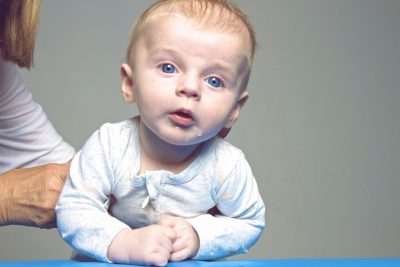
3 to 5 months
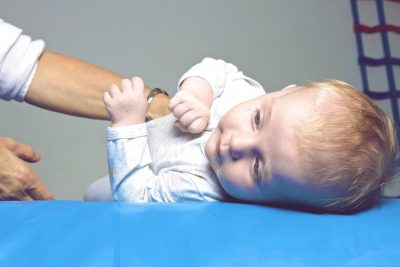
5 to 6 months
FAQs
Why is rolling important?
- Begin to explore their world and this is the first time babies can determine where they will go…they are off!
- Learn to use both sides of their body together.
- Learn how to use both arms and legs together (a prelude to creeping and crawling).
- Develop strength in their head, back, and hips in preparation for sitting and crawling.
- Develop motor planning and coordination, i.e. plan how to move for a purpose.
- Learn about risk taking (those first few rolls are a complete change in how a baby sees the world).
- Be aware of their environment and thus assist their cognitive development as they become aware of their environment and begin to control it.
- Develop their sensory systems (use of their vestibular and optical systems).
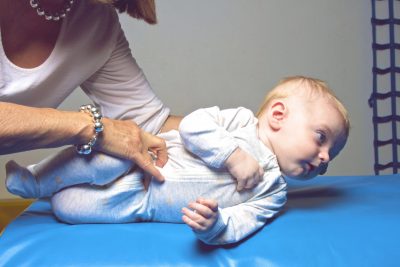
How do I help my baby roll over?
- Put a toy to the side, just out of reach, and see if he’ll move to it, i.e. roll over.
- Lie down just out of reach and encourage your baby to move to you.
- Tip your baby gently to one side when on their tummy and they may roll over.
- From three to four months, gently move one leg over the baby’s body to the other side when the baby is on their back and see if he/she will follow with his arm – they may only roll to the side initially.
- Lie the baby on their back on a blanket towards one side – lift up the other side and see if you can roll him/her to their side or tummy. Give lots of praise and smiles…sometimes in the beginning it can be a bit scary for a baby when suddenly they are not where they started!
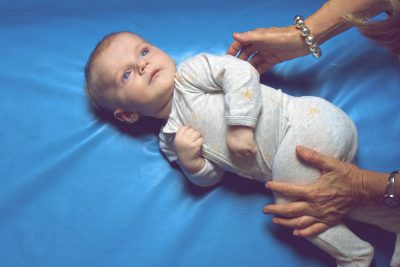
What do I do if my baby doesn’t roll?
- If your baby is a bit later than other babies at rolling you can try the above tips a bit more frequently. He/she may not like their tummy so you may need to try and increase their tummy time.
- Every time you place him/her on the floor, roll them from their back to their tummy.
Assisting your baby to roll from one position to another gives a baby the experience of moving, the confidence that it is okay as you are showing them to do it, and helps develop the muscles, the sensory systems, and coordination to perform the movement independently.
If you have any concerns about your baby’s early movement skills please ask your doctor on your next visit or contact a paediatric physiotherapist.
Stay safe, happy, and well.
Deb