Transitional gross-motor milestones – part 2
Often the first way babies learn to get around is by creeping, or pulling themselves along on their tummy. Then, as their arm and leg strength increases, they will push up into all fours. From here they will learn to move in and out of different positions such as sitting…the next transitions.
The timing of this often coincides with babies being able to sit up independently, due in part to the increased upper body strength they have gained from spending more time on their tummies. From sitting it is then easier to move onto all fours…another transition.
Tummy time is the first place to start:
- Get down on the floor with your baby.
- Show him/her how to push up on their arms.
- Have a mirror in front.
- Put him over a roll.
- Always put on the floor onto his/her tummy.
- Put into all fours over your leg.
- From sitting, help him bring his/her hands forward and assist his/her legs to move under him/her. (He/she may feel a little worried at first going onto his/her tummy…but practice makes perfect.)
- Praise all of your baby’s attempts – lots of laughter and kisses make all the effort worthwhile.
Once your baby has mastered the transition to all fours:
- Help him rock backwards/forwards and diagonally.
- Encourage him to lift his arm for toys.
- Put toys out of reach.
- Show him how to crawl and he will quickly follow your lead.
Creeping/Crawling 6-7 months
Often the first movement on a baby’s tummy is creeping, also known as commando crawling…this is moving with their tummies still on the floor.
- Your baby develops increased strength around their hips and begins moving their weight onto one side of the body, allowing the other leg to bend up. These movements are the beginnings of your baby’s legs moving independently of each other (dissociation) and as your baby experiences success in moving forward they learn to coordinate pushing with alternate legs.
- At the same time your baby is pushing up onto straight arms and lifting their chests and they may actually push backwards initially.
- From as early as 6 months, due to the increase in arm strength paired with increased leg strength and coordination, babies may push up into all fours in readiness to crawl. Some babies find creeping faster and easier if they don’t have the arm and core strength and may not move up into all fours easily, others are up and rocking in all fours by 7 months.
- Whatever your baby does, they are beginning to explore their world.
Crawling 7-8 months
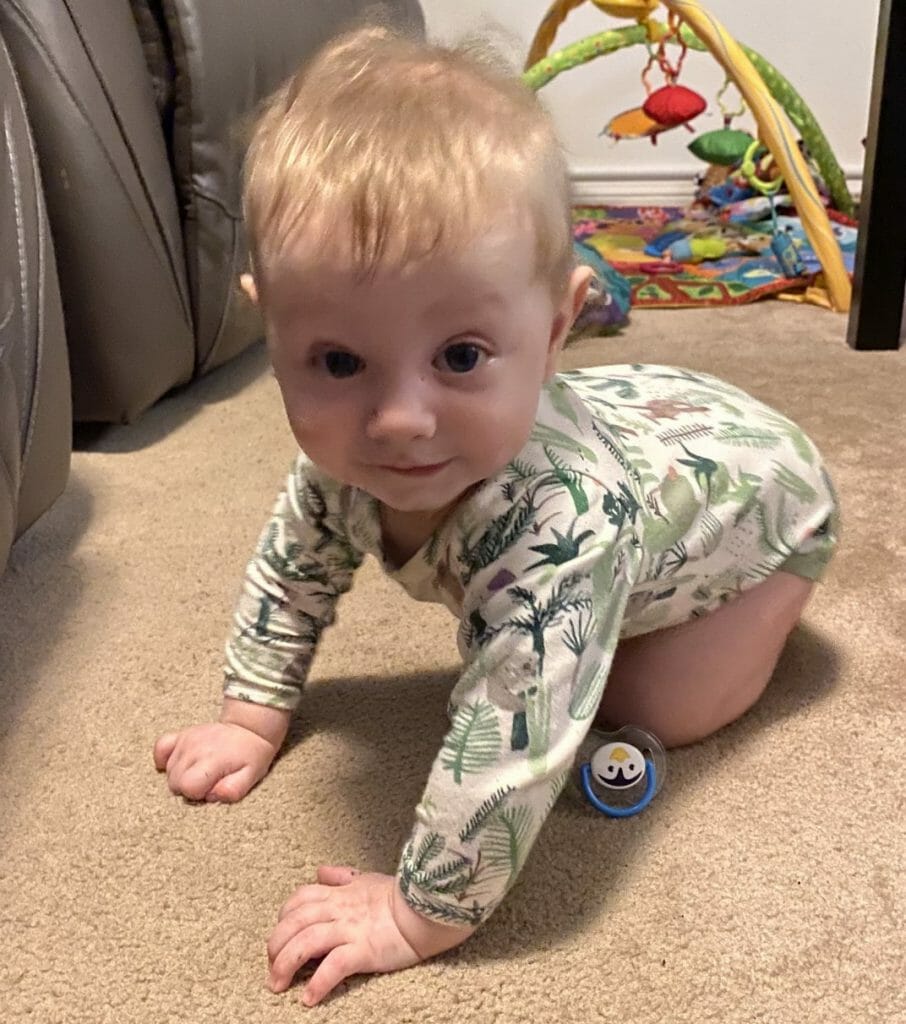
As babies’ confidence and strength improve, they push up into all fours and start to experiment with movement, such as rocking backwards and forwards, and develop increased control of moving one leg at a time.
- As babies experiment in this position, they will start reaching with either hand for toys. This weight shift strengthens all the muscles in their core.
- By 8 months many babies’ primary means of moving is crawling. The control needed for crawling is different and more efficient than creeping as they can weight shift onto the opposite arm and leg at the same time.
- Once they have mastered this, babies are able to explore their environment, navigate obstacles and follow you around everywhere. This increasing independence though a joy to behold can lead to a need to begin to baby proof your home.
It has been found since the “Back to Sleep” campaign in the early 90s many babies seem to be crawling later and a few skip it completely. They may skip it opting instead to “scoot” on their bottom, creep, roll, etc as a way to get around. As long as a baby is using arms and legs equally on both sides of their body, tolerating their tummies, and moving in and out of positions, there is usually nothing to worry about.
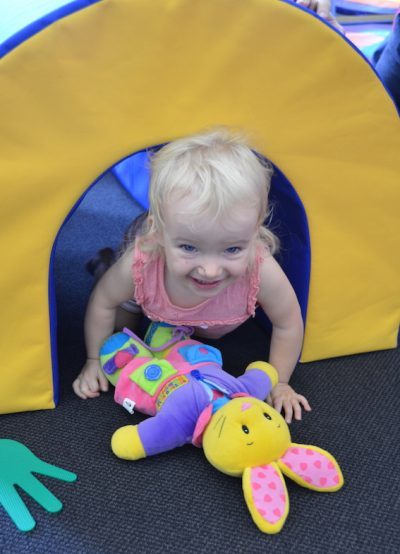
8-10 months
This is the period of development where babies master many of their transitions (movement in and out of positions).
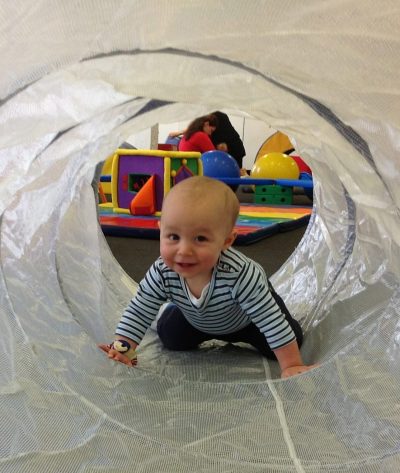
- Most babies are crawling efficiently in this period and will be using their crawling in all settings. They will be able to climb over obstacles in their path, they will be transitioning between crawl and sit and vice versa.
- They are very efficient in moving from their tummy to all fours and it may be difficult to put them down in any position as they will be immediately moving out of it.
Babies will begin to adopt other all four positions (i.e. the bear stand), will be climbing up stairs on all fours, or bear walking. This is a wonderful stage where babies are highly motivated to move, explore, and learn all about their environment.
FAQs
Why is moving into all fours important?
I am frequently asked that question as since the advent of the “Back to Sleep” Campaign I’ve seen many babies who get “stuck” in sitting and/or don’t like their tummies. The transition from tummy to all fours or sit to all fours is necessary so that your baby can then move from all fours up to stand! This initially is on furniture and then independently in the middle of the room. Even if a baby doesn’t crawl, and some don’t, they need to be able to get up from the floor if they fall and they do this by getting into all fours.
How do I get my baby into all fours?
Tummy time is the first place to start:
- Get down on the floor with your baby.
- Show him/her how to push up on their arms.
- Have a mirror in front.
- Put him over a roll.
- Always put on the floor onto his/her tummy.
- Put into all fours over your leg.
- From sitting, help him bring his/her hands forward and assist his/her legs to move under him/her. (He/she may feel a little worried at first going onto his/her tummy…but practice makes perfect.)
- Praise all of your baby’s attempts – lots of laughter and kisses make all the effort worthwhile.
Once your baby has mastered the transition to all fours:
- Help him rock backwards/forwards and diagonally.
- Encourage him to lift his arm for toys.
- Put toys out of reach.
- Show him how to crawl and he will quickly follow your lead.
What do I do if my baby doesn’t transition into different positions?
Babies develop skills using different methods and on their own timetable. If your child hasn’t shown an interest in moving by some means (whether by creeping, crawling, rolling, or scooting on their bottom), figured out how to get from sitting to the floor, or from sitting to standing by age 10-12 months, speak to your doctor or paediatric physiotherapist. Always keep in mind that babies work to their own timetable and as long as their movements are progressing, just keep encouraging them.
What’s next after my baby gets into all fours/crawls?
Once your baby has mastered the transition of moving in and out of all fours and crawling, they are on their way to complete mobility….walking.
Stay safe, well, and healthy.
Deb