Self-feeding: part 2
Last week we discussed the first 4 months of your baby’s feeding development. This period focuses on reflex behaviour and developing oral motor control so that by 6 months babies can tolerate a mixed diet of fluids and solids.
From 6 months to 4 years old, babies and children develop the skills to successfully eat independently. At first this will be with your help, then by your baby using their fingers, and then moving to successfully manage a spoon and fork by 4 years. To successfully become an independent self-feeder, the development of gross and fine motor skills must happen as well as knowledge of the senses and being comfortable with different foods.
Deb’s key takeaways
- Children have become more and more independent in oral motor skills while gaining fine motor skills over the first 3-4 years.
- Babies start with finger foods, moving towards using a spoon and fork independently.
- Babies become independent with the use of an open cup.
- Meal times can be stressful, but there are many ways to reduce the stress and enjoy this wonderful social experience.
6-9 months

9-12 months

12-18 months

18-24 months

2-3 years

Why self-feeding is an important milestone
- Babies and children are learning to eat independently – a skill for life.
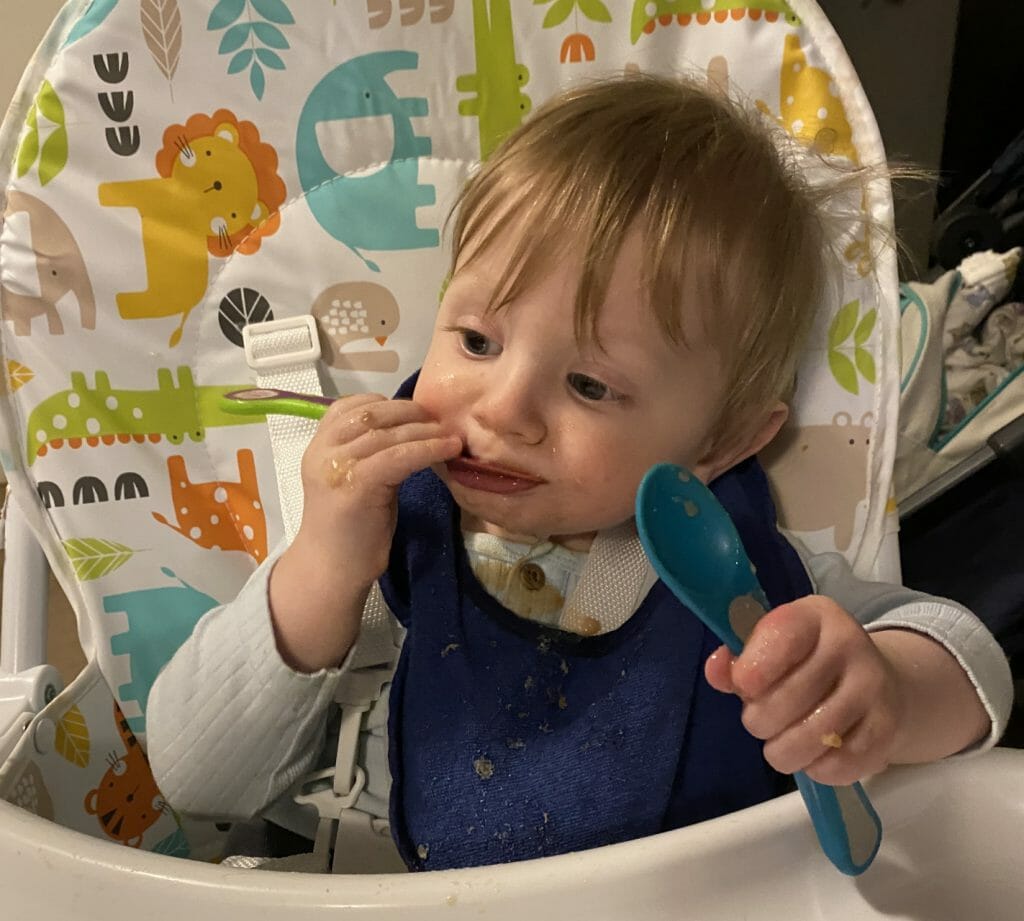
- It involves a lot of feeling, squeezing, dropping food. It is messy, but it develops their fine motor skills so they can hold a spoon independently.
- Children learn about taste, texture, smell, and temperature of food.
- Be patient – your child will get there eventually. Take lots of photos to catch the funny side!
Top tips for beginning to finger feed
- Soft bite sized pieces of food.
- Give them food into their hand like soft fruit or soft cooked vegetables.
- Just put a few pieces within your baby’s reach so it doesn’t all end up on the floor.
Tips for using a spoon
- Offer your baby a spoon to hold from 6 months.
- Help them load the spoon in early days.
- Feed them with one spoon while they hold another spoon.
Tips for using a cup
- Give your child a small plastic non-breakable cup.
- Let them play with the cup to get used to the way it feels.
- Guide your child the first few times they use the cup.
- Only put a small amount of liquid in the cup.
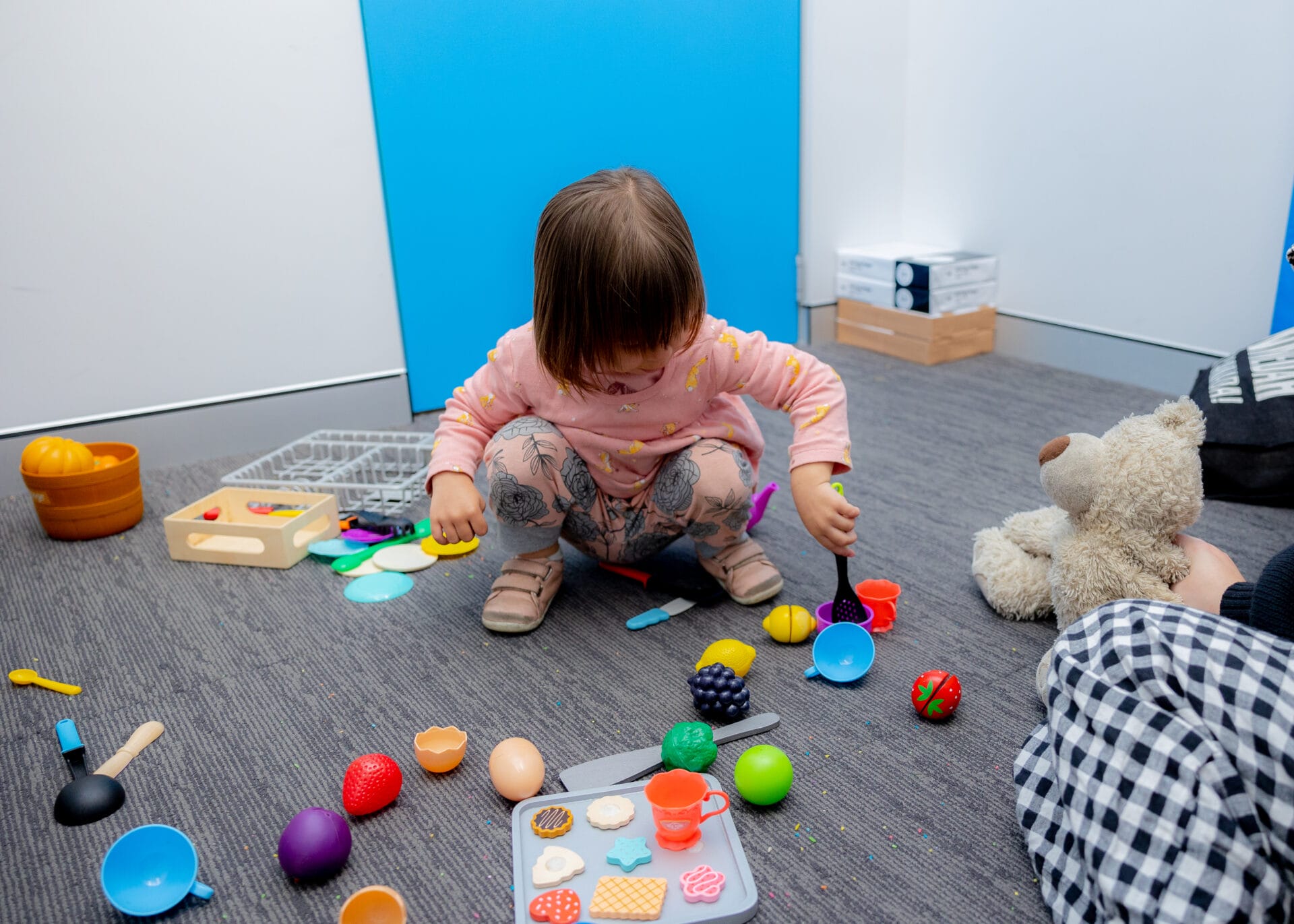
- Have tea parties and eat and drink with your child at meal times.
How to handle your baby’s mess and food play
Messy eating and playing with food are common and healthy parts of your child’s development. If you find it stressful:
- Use a bib.
- Cut food into strips so it is easier to pick up.
- Let your baby eat with their hands.
- Feed outside.
- Put a plastic sheet under the high chair.
Tips for play to help children with self-feeding
- Scoop and pour water in the bathtub.
- Use scoops and shovels with rice and sand.
- Play with play dough.
- Imaginary play – feed their baby doll.
After the first few months of your baby’s life, their feeding changes from being fed to self-feeding. They move from being totally dependent to being independent feeders at meal time. It’s great to watch them enjoying their freedom and interacting socially with your family and their friends!
If you have any concerns about your child’s self-feeding, contact your GP, paediatrician, or therapist.
Keep safe, happy, and well.
Deb