It’s one of the most common questions we hear from parents: “Is my child talking as much as they should be by now?”
Maybe your child isn’t talking as much as their cousin did at the same age. Maybe a teacher mentioned something in passing. Or maybe it’s just a quiet feeling that something isn’t quite clicking yet.
If you’re reading this at the end of a long day, here’s the short version: noticing early is a good thing. It’s not necessarily a sign you’ve done anything wrong — it’s the first step to understanding where your child’s speech is at, and getting the right support if it’s needed.
What is speech and language?
It helps to know the difference between the two areas we look at:
- Receptive language – how much your child understands
- Expressive language – how much your child can say or communicate
Children often understand far more than they can say, which is developmentally normal. A toddler might follow “go get your shoes and put them by the door” long before they can say a sentence that complex themselves. But it’s still helpful to know what’s typically expected in each area, at each stage, so you know what you’re looking for.
The importance of early language in child development
The first two to three years of life are when the brain is building the foundations for communication faster than at any other time. Early language skills — understanding, gesturing, babbling, first words — are the building blocks for later talking, reading, and social connection.
Language development doesn’t happen in isolation. It’s tied closely to several other areas of your child’s growth.
Social Connection
Talking is how children build relationships — with parents, siblings, friends, and eventually teachers. A child who can express what they want, ask for help, or share something exciting is a child who gets to participate more fully in the world around them. Communication difficulties can sometimes lead to frustration, or a child pulling back from social situations altogether.
Cognitive Development
Language and thinking grow together. Words give children a way to categorise, question, and make sense of their world — “why,” “where,” “what happens if.” The more words a child has, the more tools they have for problem-solving and understanding cause and effect.
Early Literacy
Spoken language is the foundation for reading and writing. Vocabulary, sentence structure, and the ability to hear and play with sounds (called phonological awareness) in the toddler and preschool years are strong predictors of how a child will go with reading later on.
Emotional Regulation
Being able to say “I’m frustrated” or “I don’t want that” gives children an outlet other than a tantrum. As expressive language develops, many parents notice a real shift in how their child manages big feelings, simply because they finally have the words to use instead.
This is why we don’t say “wait and see.” Noticing early doesn’t mean jumping to conclusions. It means giving your child the best possible start, whether that’s simply reassurance, or some extra support put in place early, when it tends to make the biggest difference.
A developmental guide for the first two years
(This varies from child to child — these are general guides, not strict cut-offs.)
By around 6-12 months
Most children are babbling with a range of sounds — strings like “bababa” or “dadada” — and starting to respond consistently when their name is called. You’ll likely see simple gestures emerging too, like waving bye-bye, reaching to be picked up, or pointing at something they want. Many children are also beginning to imitate sounds and attempt simple words like “mama,” “dada,” or “up.”
By around 18 months
Understanding is well ahead of talking at this stage — most children understand far more than the words they can say. Expressively, children typically have somewhere between 20 and 50 meaningful words, and can usually follow a simple one-step instruction, like “give me the ball.” Pointing becomes more purposeful too — both to ask for things, and to share interest with someone else (“look at that!”).
By around 2 years
Vocabulary tends to sit at 200+ words, and 2-3 phrases and most children are starting to combine two words together, like “more milk” or “big dog.” Familiar adults can usually understand them at least half the time, even if pronunciation isn’t perfectly clear yet, and you’ll typically hear a wider range of consonant sounds coming through.
Development can vary significantly between children, and that’s expected. Some children hit these markers early, some take a little longer, and both can be completely typical.
Signs that may be worth a professional opinion
Every child develops at their own pace. That said, the following are commonly recognised as signs that may benefit from a speech pathology assessment:
- No babbling by around 12 months
- No first words by around 18 months
- Fewer than 200 words, or no two-word combinations, by around 2 years
- Not responding to their name or to souns
- Limited use of gestures (pointing, waving, showing, sharing)
- Difficulty following simple instructions
- Ongoing frustration when trying to communicate
- Not sharing activities together with others — sometimes called joint attention
- Loss of words or communication skills previously used (this is a regression, and is always worth discussing with a professional, regardless of age)
None of these signs alone confirm a delay or disorder. They simply indicate that an assessment may provide useful clarity.
Why early support matters
Speech pathologists work with children using play-based, evidence-informed strategies suited to their age and stage of development. Early support can help with:
- Building vocabulary and sentence structure
- Reducing frustration around communication
- Supporting clearer speech sounds
- Strengthening social interaction and back-and-forth communication
Seeking an assessment does not mean something is “wrong” with your child. It simply provides clarity — either reassurance that development is progressing typically, or an early, supportive start if extra help is useful.
Early language activities for parents and kids
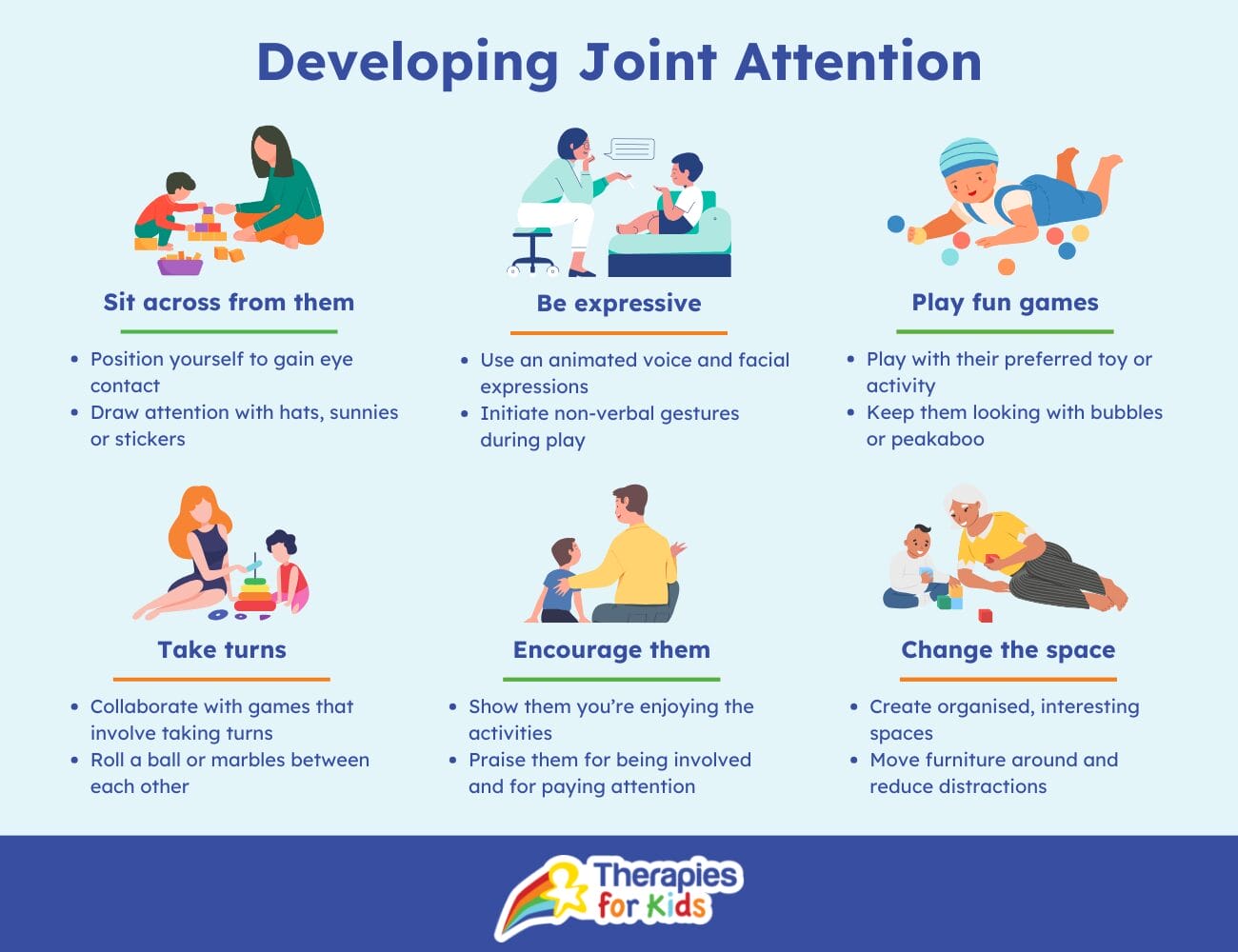
You don’t need special equipment or training to support your child’s speech and language — small changes to everyday moments make a real difference.
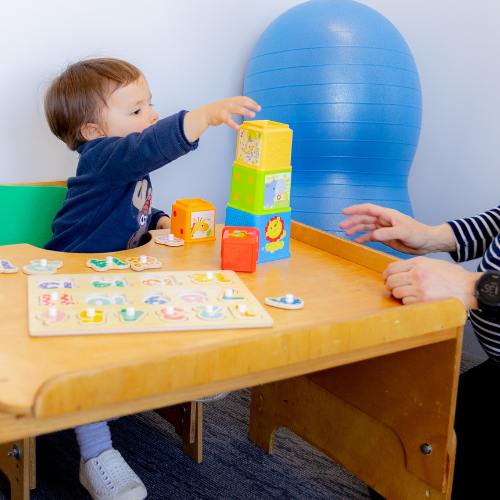
Get Face to Face
- Get down to your child’s level so they can see your mouth and eyes clearly
- Sit or kneel in front of them during play, rather than talking from behind or above
Follow Their Lead
- Talk about what they’re interested in, rather than redirecting them to something else
- If they’re fascinated by a truck, that’s your conversation — not the book you’d planned to read
Build Joint Attention
- Point at things together, share a look, share a laugh
- This shared focus is one of the earliest building blocks of communication, and it strengthens every other language skill that follows
Narrate Everyday Routines
- Bath time, snack time, and the walk to the letterbox are all opportunities to talk about what’s happening
- Simple, repetitive language (“in the bath,” “washing your tummy,” “all done!”) helps words stick
Pause and Wait
- After you ask a question or make a comment, count to five in your head before jumping in
- This gives your child space and time to respond, rather than filling the silence for them
Expand, Don’t Correct
- If they say “ball,” respond with “yes, big red ball!” rather than asking them to repeat it correctly
- This models richer language without turning the moment into a correction
Read Together, Often
- Point at pictures, ask simple questions, and let them turn the pages
- It’s less about finishing the story and more about the back-and-forth along the way
Limit Background Noise
- A quieter environment makes it easier for your child to hear and process language
- Try turning off the TV during play or mealtimes to give speech room to be heard
Therapies For Kids provides expert support for speech, language and communication development
Through early support and evidence-informed strategies, children can build stronger vocabulary, clearer speech, and more confident communication — often reducing frustration for the whole family along the way. By understanding the milestones and using practical strategies at home, parents and speech pathologists can work together to give a child’s communication the best possible start.
At Therapies For Kids, our speech pathology assessments start with understanding your child through play, everyday routines, and conversation with you as their parent or carer. From there, we build a plan together, so you understand what we’re working on and why, every step of the way.
There’s no need to have all the answers before reaching out. A conversation with our team is often the simplest first step.
Enquire online or call us on (02) 9519 0966 for more information.
Acknowledgement
This article was developed for Deb’s Blog and is based on the clinical expertise and original contribution of one of their clinical expert, whose evidence-informed insights and detailed review helped ensure the content reflects current best practice in speech pathology.
References
The information is informed by:
-
Raising Children Network (Australia) — Language Development in Children (1–2 years): https://raisingchildren.net.au/toddlers/development/language-development/language-1-2-years
-
Speech Pathology Australia — Speech, language and literacy development in early childhood (fact sheet): https://www.speechpathologyaustralia.org.au/Communication_Hub/Resources/Fact_Sheets/Speech-language-and-literacy-development-in-early-childhood.aspx
-
American Speech-Language-Hearing Association (ASHA) — Communication Milestones by age: https://www.asha.org/public/developmental-milestones/communication-milestones/